



By Syed Sammar Mehdi
Morning light spread over the Zabarwan mountains on April 26, turning Dal Lake the colour of burnished copper. Vendors arranged flowers along the boulevard near Ghat No. 16 while shikaras drifted through the early haze.
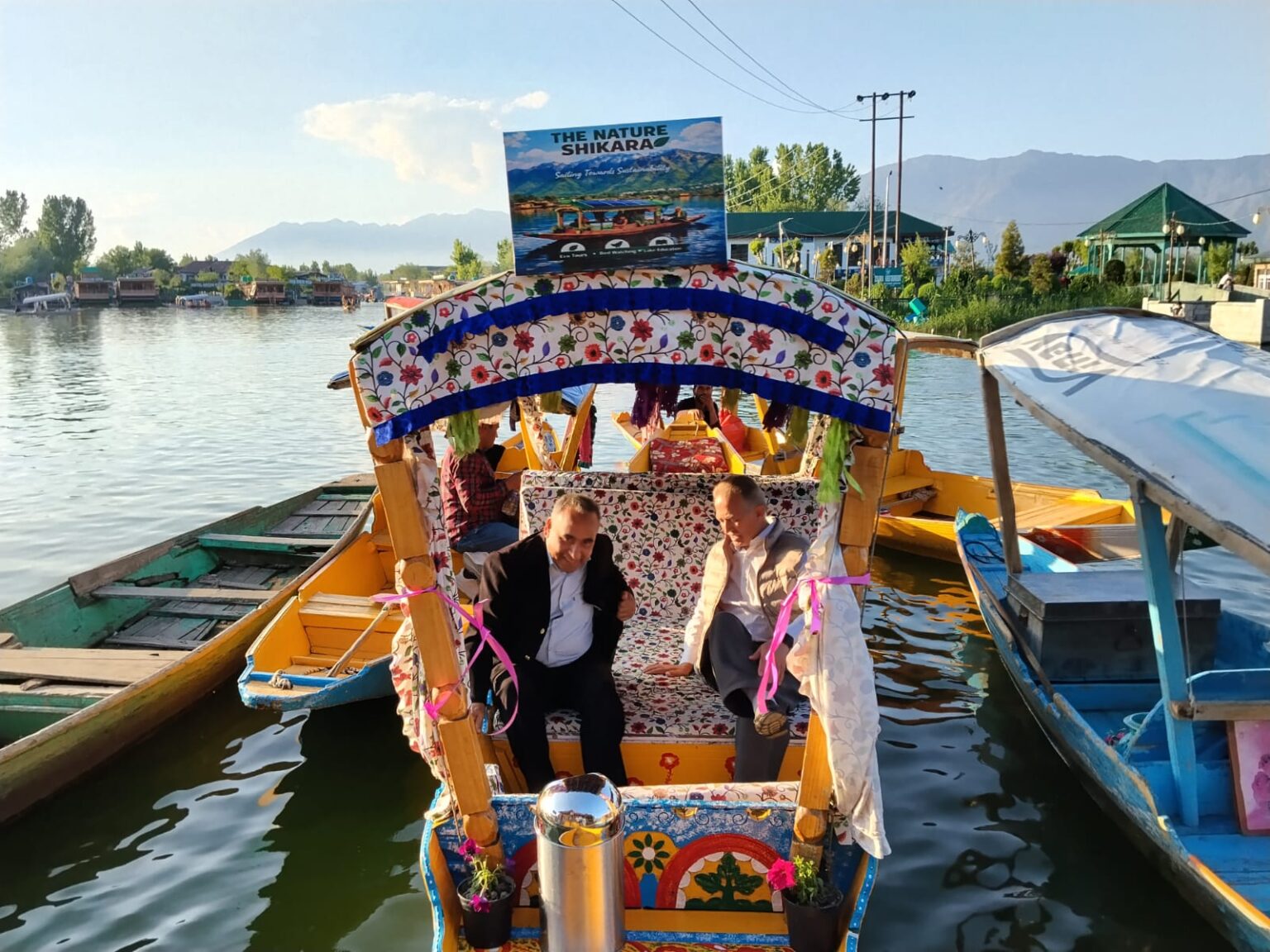
Near the dock, one boat drew unusual attention.
Its canopy held solar panels instead of decorative cloth. Walnut woodwork framed the cabin interior. Symbols of Kashmir’s heritage ran along the painted sides.
Officials, conservationists and boatmen gathered around it as cameras clicked and school representatives leaned forward to listen.
The vessel arrived with a purpose larger than sightseeing.
Organizers called it The Nature Shikara, a floating classroom designed to teach visitors how Dal Lake survives, and what threatens its future.
Environmental lawyer Nadeem Qadri moved through the crowd greeting guests before the launch ceremony began. Through his organization, The Nature University, Qadri has pushed environmental education into schools, public campaigns and civic discussions. Dal Lake, he said, offered the clearest place to begin.
“The vessel would give lessons on the lake’s living systems,” Qadri said. “Every voyage can become an environmental learning experience.”
That idea has gained support well beyond environmental circles.
Syed Farooq Ahmad Gillani, advisor to The Nature University, inaugurated the vessel alongside S.D. Choudhary, SSP Enforcement with the Tourist Police. Farooq Ashai, convenor of the Private Schools’ Association and advisor to the initiative, attended with educators preparing student visits for the coming months.
“We often teach children about the environment inside classrooms,” Ashai said. “This initiative places that lesson directly on the water.”
Members of Jammu and Kashmir Eco-Watch filled the front rows during the ceremony. Their presence reflected a larger concern surrounding Dal Lake, whose waters support tourism, transport and entire neighbourhoods built along its edges.
Restoration projects have expanded during recent years as pollution, unchecked construction and declining water quality place mounting pressure on the ecosystem.
The Nature Shikara attempts to answer that crisis through the tourism economy itself.
Visitors aboard the vessel pass floating gardens and Char Chinari while guides explain aquatic life, biodiversity and water conservation. Solar-powered displays line the cabin, and biodegradable materials cover the passenger spaces. Local artisans crafted the walnut interiors, linking Kashmiri design traditions with the boat’s environmental mission.
“Every design choice amplifies ecological harmony while deepening visitor connection to the water,” Qadri said.
Near the rear of the boat, Javeed Ahmad Sofi rested one hand on an oar as guests boarded. Residents around Dal Lake know him simply as Michael. His family has lived beside the lake for generations, and he learned its waterways during childhood.
“This is a dream come true,” Sofi said before pushing the vessel gently away from the dock.
His role highlights the project’s central philosophy: people living on the lake hold knowledge that conservation campaigns need. Organizers want boatmen and residents to guide the environmental conversation rather than remain at its margins.
Tourists have long arrived at Dal Lake seeking photographs of carved shikaras, floating markets and the Zabarwan mountains mirrored in the water. The Nature Shikara adds another layer to that journey.
Guides explain how lake vegetation filters impurities, waste affects water systems and restoration efforts depend upon public participation.
Representatives from Sanctuary Nature Foundation joined the launch ceremony and donated copies of Sanctuary magazine to support the educational program. Organizers viewed the contribution as evidence that local conservation efforts in Kashmir now command national attention.
The project also arrives as Kashmir’s tourism industry enters a new phase. Visitors increasingly seek experiences tied to ecology, local culture and community engagement. Organizers believe Dal Lake provides an ideal setting for that shift because every aspect of life around the water remains connected to its survival.
Schoolchildren from private institutions linked through Ashai’s network will soon begin regular excursions aboard the vessel. Teachers plan to use the tours as field lessons on ecology, conservation and civic responsibility.
By afternoon, sunlight settled warmly over the lake as the shikara glided deeper into the channels. Michael steered past floating gardens and lively banks with the ease of long familiarity. Ripples spread outward behind the oars while tourists watched the mountains shimmer in the distance.
Dal Lake has long stood as Kashmir’s defining image. Now, one shikara moves through its waters with a new purpose: teaching the valley that the lake’s future rests on what its people choose to protect today.
This article has been automatically published using a syndicated feed. The content is sourced externally and may not have been reviewed by The Freelancers Team.