


Srinagar- Nearly 1.92 lakh sheep entered Kashmir in the run-up to Eid-al-Azha this year, fuelling a livestock trade estimated at around ₹384 crore. Yet, despite the massive inflow and bustling animal markets across the Valley, traders say sales remained slower than expected, leaving many dealers with unsold stock even after the festival.
According to the Kashmir Mutton Dealers Association (KMDA), around 1,200 trucks carrying sheep entered the Valley over a span of 15 days ahead of Eid-al-Azha.
1,200 Trucks, Nearly 2 Lakh Sheep
Association General Secretary Mehraj-ud-Din said each truck carried more than 160 sheep on average, taking the total number of animals brought into Kashmir to nearly 1.92 lakh.
“About 1,200 trucks carrying sheep entered the Valley during the last 15 days till May 27. Every truck was carrying over 160 sheep,” he said.
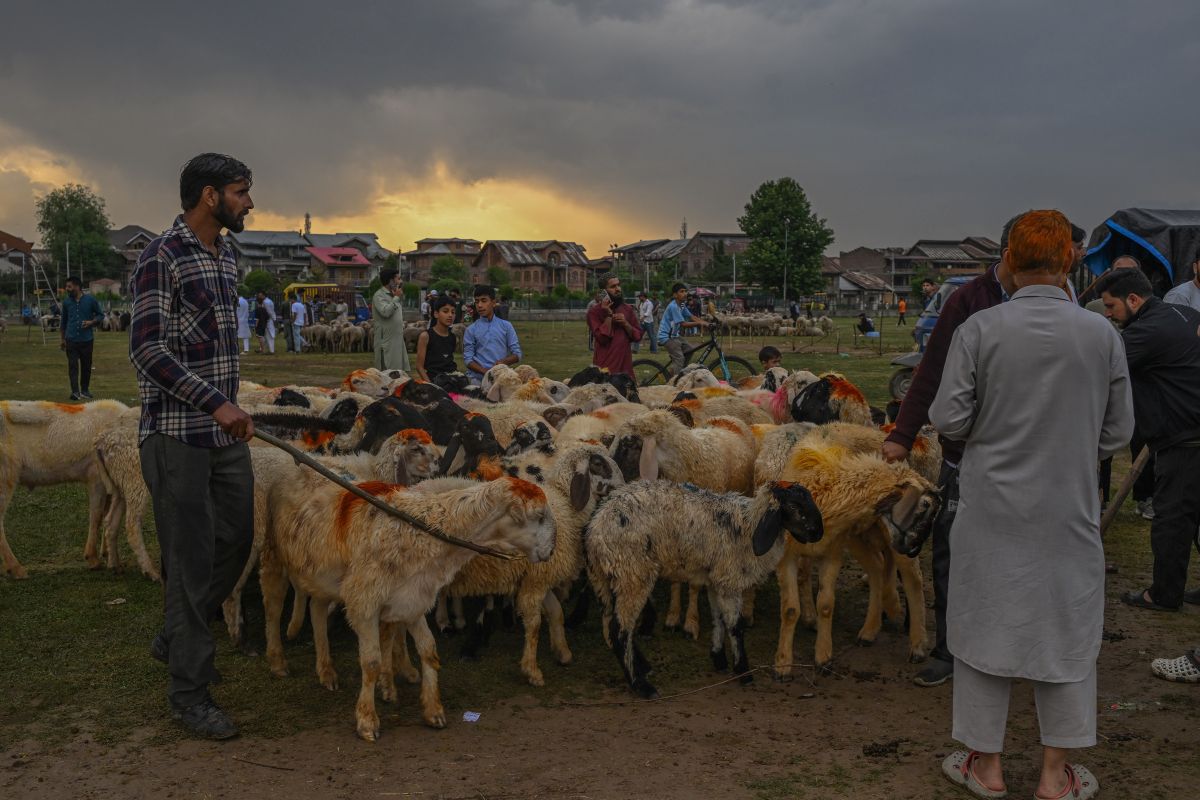
Most of the livestock was imported from outside Jammu and Kashmir to meet the seasonal demand associated with Qurbani. Additional supplies also arrived from Rajouri, Jammu and other regions, further adding to the availability of sacrificial animals in the Valley.
A ₹384-Crore Eid Economy
With the average price of a sheep hovering around ₹20,000, the Eid-al-Azha livestock market generated business worth an estimated ₹384 crore.
The annual festival traditionally triggers one of Kashmir’s largest seasonal economic activities, involving livestock traders, transporters, commission agents, fodder suppliers and market operators.
Major livestock markets, particularly the Eidgah mandi in Srinagar, witnessed a steady rush of buyers in the days leading up to Eid. Similar scenes were witnessed in district-level animal markets as families visited mandis to purchase animals for sacrifice.
Sales Fall Short of Expectations
However, despite the scale of trade and visible activity in the markets, dealers said business did not translate into the kind of sales seen in previous years.
“The stock this year sold far less than the previous year,” Mehraj-ud-Din said, adding that a significant number of dealers were left with unsold animals despite the festive demand.
Traders attributed the slowdown to a combination of factors, including higher livestock prices, changing spending patterns and subdued purchasing power among consumers.
Many buyers, they said, appeared more cautious in their spending this year, even as the tradition of Qurbani continued to draw participation across the Valley.
A Market Full, Buyers Few?
The contrast between the massive inflow of livestock and relatively slower sales has become one of the defining features of this year’s Eid market.
While the Valley witnessed one of its largest seasonal arrivals of sacrificial animals, traders say demand failed to keep pace with supply, resulting in lower-than-expected sales and leftover stock for several dealers.
For many traders, the season highlighted both the scale of Kashmir’s Eid economy and the growing challenges facing traditional markets amid changing economic realities.
Eid-al-Azha remains one of Kashmir’s most significant religious festivals and continues to drive large-scale livestock movement and trade every year. However, this year’s experience suggests that a thriving market presence does not always guarantee brisk business. (With inputs from KNO)
This article has been automatically published using a syndicated feed. The content is sourced externally and may not have been reviewed by The Freelancers Team.