


Dubai/Islamabad- Diplomatic efforts to revive the collapsed interim agreement between Iran and the United States intensified on Tuesday even as the two adversaries exchanged fresh military strikes for the 10th consecutive day, widening the conflict across the Persian Gulf and threatening global energy supplies.
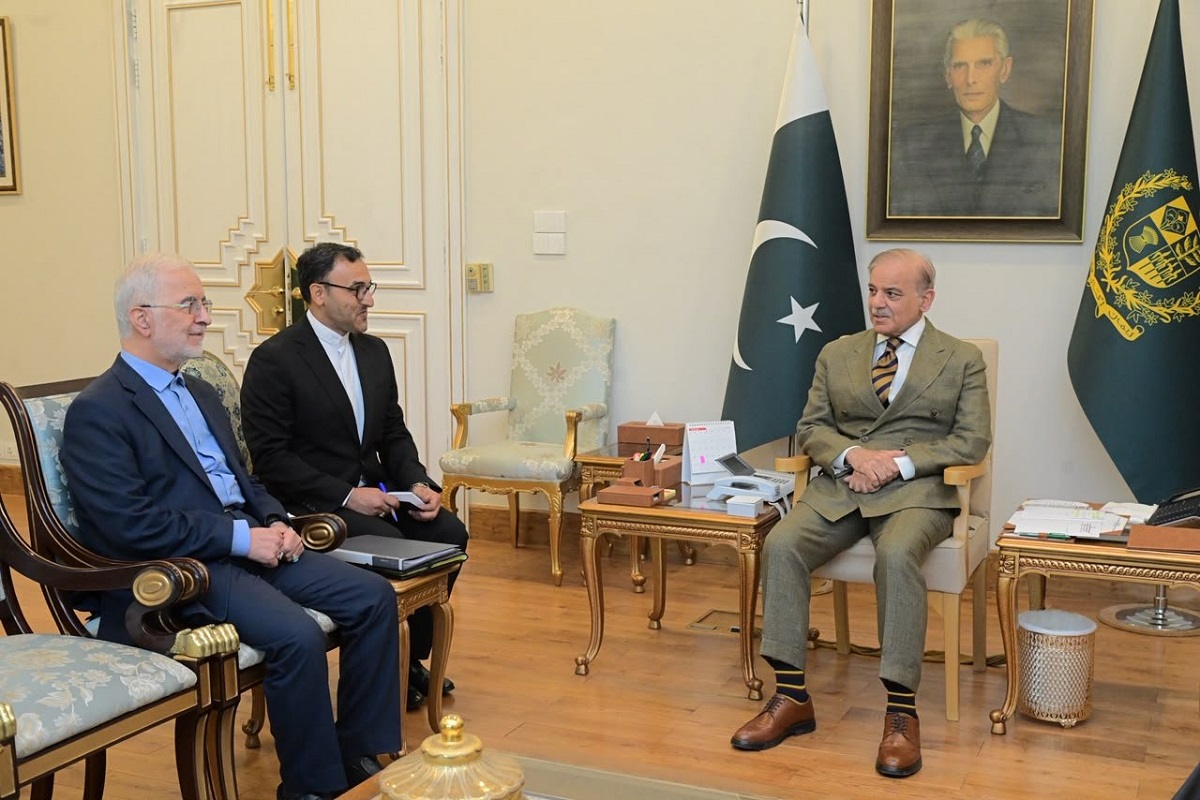
Iranian Interior Minister Eskandar Momeni travelled to Pakistan, which brokered last month’s memorandum of understanding (MoU) between Tehran and Washington, for high-level meetings aimed at exploring a path back to negotiations.
The renewed diplomatic push came as hostilities escalated in the Strait of Hormuz, the Red Sea and across several Gulf states, with both sides accusing each other of violating the Pakistan-mediated agreement.
Pakistan launches fresh mediation effort
Momeni held closed-door talks with Pakistan Army Chief Field Marshal Asim Munir before meeting Prime Minister Shehbaz Sharif in Islamabad.
According to Pakistani officials, Islamabad is attempting to persuade both Washington and Tehran to resume negotiations under the framework of the June MoU, which had temporarily halted hostilities before collapsing amid renewed military confrontations.
In a statement issued after the meeting, Sharif expressed deep concern over the escalating conflict and urged all parties to exercise restraint to prevent further destabilisation of the region.
Pakistan had played a pivotal role in facilitating the earlier agreement, which required both countries to cease hostilities and reopen the Strait of Hormuz to commercial shipping.
Strait of Hormuz remains paralysed
Despite diplomatic efforts, fighting around the strategically vital Strait of Hormuz continued unabated.
Commercial shipping through the waterway—through which nearly one-fifth of global crude oil and liquefied natural gas normally passes—remained largely suspended as both countries targeted maritime assets and infrastructure.
The British military’s United Kingdom Maritime Trade Operations (UKMTO) said a commercial tanker was attacked off the coast of Oman early Tuesday, forcing its crew to abandon the vessel.
Iran also reportedly attacked another tanker transiting the strait, further disrupting shipping traffic.
The United States has intensified efforts to escort merchant vessels through alternative routes after accusing Iran of obstructing navigation despite commitments made under last month’s agreement.
Fresh US airstrikes across Iran
The US military carried out another round of airstrikes early Tuesday targeting what it described as Iranian military infrastructure.
US Central Command (CENTCOM) said its aircraft struck military command centres, missile and drone launch sites, maritime facilities and air defence systems.
“American forces remain postured and prepared to hold Iran accountable for unwarranted aggression toward civilian mariners seeking to freely and openly transit the Strait of Hormuz,” CENTCOM said.
Iranian state media reported explosions in several provinces, including Fars, Hormozgan, Ilam, Kerman, and Sistan and Baluchistan, indicating the broad geographic scope of the attacks.
Iran hits US military infrastructure in Gulf
Iran’s Islamic Revolutionary Guard Corps (IRGC) announced multiple retaliatory operations targeting American military installations in Kuwait and Jordan.
In a series of statements, the IRGC said the latest phases of Operation Nasr-2 (Victory-2) focused on disabling US radar, communications and missile defence systems to pave the way for expanded missile and drone operations.
According to the IRGC, missiles and drones struck:
- Long-range radar facilities;
- Satellite communications centres;
- Patriot missile defence systems;
- FPS-117 early warning radar installations;
- Missile defence radar systems;
- Communications infrastructure supporting US air defence operations.
The IRGC also claimed to have struck Ali al-Salem Airbase in Kuwait, damaging an MQ-9 Reaper drone hangar and destroying several drones stationed there.
Later, it announced another strike on Ahmad al-Jaber Airbase, claiming to have destroyed additional radar systems and communications facilities.
In another statement, the IRGC claimed it had destroyed a US missile-defence radar system at a military base in Jordan and hit an F-15 fighter aircraft inside its protective shelter.
“The region is no place for American aggressors,” the IRGC said, warning Washington to prepare for “heavier and more decisive” missile and drone attacks.
Iranian Army targets US bases
Separately, Iran’s Army announced the latest phase of Operation Sa’eqeh (Lightning), saying loitering attack drones targeted three American military installations in Kuwait.
According to military statements, the strikes targeted:
- Administrative buildings at Camp Arifjan;
- Helicopter facilities at al-Udairi Camp;
- Troop accommodation and infrastructure at Ahmad al-Jaber Airbase.
Iran’s military described the attacks as retaliation for repeated US violations of Iranian territory and breaches of the Pakistan-mediated ceasefire agreement.
Meanwhile, Iranian officials accused the United States of targeting power grids and water facilities inside Iran.
New Red Sea front
The regional conflict expanded further after Yemen’s Iran-aligned forces declared a naval blockade of Saudi Arabia.
The move threatens shipping through the Bab el-Mandeb Strait, one of the world’s busiest maritime chokepoints connecting the Red Sea to the Gulf of Aden.
Yemen’s SABA news agency reported that at least six commercial vessels altered course after receiving warnings from the movement.
Officials in Sana’a also warned international shipping companies against using the Bab el-Mandeb Strait, significantly increasing concerns over global supply chains.
Saudi Arabia has increasingly relied on its east-west pipeline linking the Gulf to the Red Sea after commercial traffic through Hormuz slowed dramatically.
Oil prices surge
The continued disruption to maritime trade pushed global oil prices sharply higher.
Benchmark Brent crude traded above USD 90 per barrel on Tuesday, while average petrol prices in the United States climbed to around USD 4 per gallon, adding fresh inflationary pressure ahead of the US midterm elections.
Analysts warned that prolonged disruption to the Strait of Hormuz and the Bab el-Mandeb Strait could significantly affect global energy markets and international trade.
Diplomatic window narrowing
Despite the military escalation, Washington maintained that diplomacy remained possible.
US Secretary of State Marco Rubio reiterated that the United States remained willing to negotiate but insisted any agreement “has to be real.”
However, deep mistrust continues to overshadow prospects for renewed talks.
Iran maintains that it came under attack while engaged in nuclear negotiations, while Washington accuses Tehran of violating the interim agreement by resuming attacks on shipping in the Strait of Hormuz.
With fighting now extending from Iranian territory to Kuwait, Jordan, Bahrain, Saudi Arabia and the Red Sea, diplomats warned that unless negotiations resume quickly, the conflict risks evolving into a wider regional war with significant consequences for global security and the international economy.
This article has been automatically published using a syndicated feed. The content is sourced externally and may not have been reviewed by The Freelancers Team.