


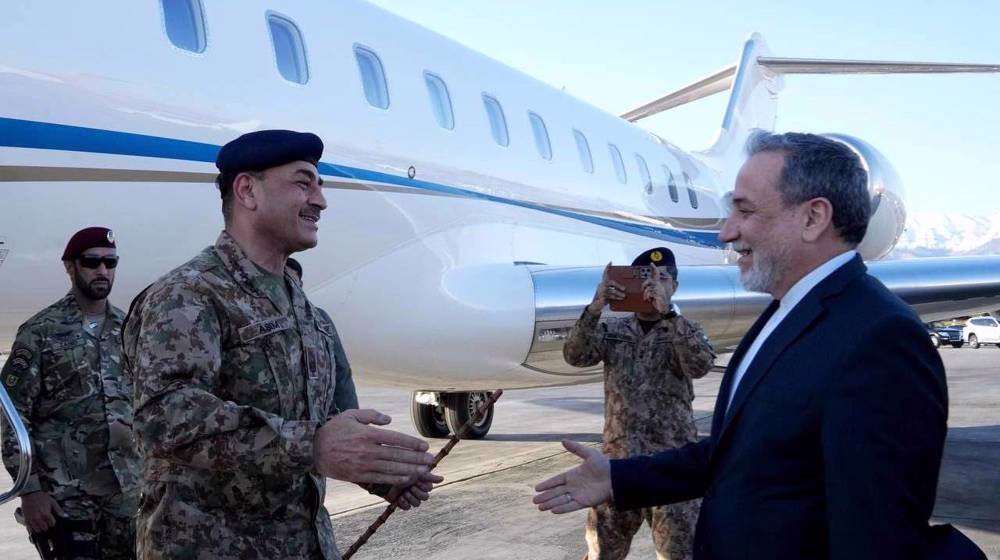
Tehran: Pakistan’s army chief, Field Marshal Asim Munir, has arrived in Tehran at the head of a high-level political-security delegation, carrying a new message from Washington as diplomatic efforts intensify to extend a fragile ceasefire between Iran and the United States.
The delegation, which includes interior minister Mohsin Naqvi as well as representatives from the foreign ministry, security institutions and technical experts, landed in the Iranian capital on Wednesday, according to Iranian media reports. Iran’s foreign minister, Abbas Araghchi, welcomed the delegation on arrival.
In Islamabad, the military’s media wing, Inter-Services Public Relations (ISPR), said the visit was part of ongoing mediation efforts.
The purpose of the visit is to convey a message from the United States to the Iranian leadership and to prepare the ground for a second round of negotiations between Tehran and Washington.
Earlier, Iran’s foreign ministry spokesperson, Esmail Baghaei, confirmed that Tehran would host the Pakistani delegation and said indirect exchanges between Iran and the US were continuing. “Following the talks that took place in Islamabad, and also the discussions that the Pakistani side has had with the United States, our views have been conveyed and heard,” he said. “Naturally, during this visit, the two sides are expected to discuss their viewpoints in detail.”
The renewed diplomatic push comes as a two-week ceasefire between Iran and the US, brokered by Pakistan, remains in place and is set to expire on 22 April. The truce followed 40 days war that brokeout on 28 February, when the United States and Israel launched attacks on Iran, disrupting global energy markets and trade.
Mediators are now attempting to bridge differences on three key issues that derailed the first round of talks in Islamabad over the weekend: Iran’s nuclear programme, the reopening of the Strait of Hormuz, and compensation for wartime damages.
Although the US and Iran held rare direct talks in Pakistan, the negotiations ended without agreement. US vice-president JD Vance, who led the American delegation, said the talks faltered over Tehran’s refusal to abandon its nuclear programme. Iran, however, blamed the failure on what it described as “excessive demands” by the US.
Mohammad Bagher Ghalibaf, speaker of Iran’s parliament and head of its delegation, said his team had presented “forward-looking initiatives”, but the opposing side failed to gain the trust of Iranian negotiators.
Pakistani officials said preparations were under way for a second round of talks in the coming days, with Islamabad likely to remain the venue. Geo News reported that authorities and security agencies had been instructed to make the necessary administrative and security arrangements.
The diplomatic activity has been accompanied by optimistic remarks from US president Donald Trump, who said the world should brace for an “amazing two days”, suggesting the conflict could be nearing an end. In remarks to the New York Post, he said: “You should stay there, really, because something could be happening over the next two days.”
Trump also indicated that US negotiators could return to Pakistan, praising Munir for doing a “great job” in facilitating the talks.
Separately, Pakistan’s prime minister, Shehbaz Sharif, began official visits to Saudi Arabia, Qatar and Türkiye on Wednesday. The foreign office said the visits were primarily bilateral, focusing on cooperation as well as regional peace and security, but also formed part of broader efforts to support a diplomatic resolution between Iran and the US.
This article has been automatically published using a syndicated feed. The content is sourced externally and may not have been reviewed by The Freelancers Team.