



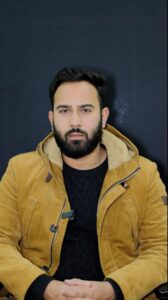

“I lost both of them before my eyes… now I cannot watch anyone else struggle for breath like that.” — Abroo
On a quiet April morning in Srinagar, in the corridors of Imam Hussain Hospital, Bemina, Srinagar, J&K a machine stood still yet powerful — a ventilator, newly installed. It did not just represent medical infrastructure; it carried memory, grief, and an unyielding act of humanity.
For 30-year-old Abroo from Zadibal, this was not a donation. It was a promise fulfilled.
A Loss That Reshaped a Life
The story traces back to 2020, during the devastating wave of COVID-19. Hospitals across Kashmir, like much of the world, were overwhelmed. Medical resources were stretched thin; ventilators — the thin line between life and death — became scarce.
Abroo’s father, already battling stage 3 cancer, was admitted to SMHS Hospital.
By his side stood her brother — not just as an attendant, but as a son holding together a fragile moment of hope but tragedy unfolded swiftly.
While caring for his father in the hospital, her brother fell critically ill. Though the time coincided with the COVID-19 crisis, his condition worsened due to double pneumonia. Doctors advised immediate ventilator support — a necessity for survival.
“He needed oxygen, he needed a machine… but there was nothing,” Abroo recalls.
Despite medical advice, a ventilator was not provided at SMHS Hospital. On 6th May 2020, her brother passed away. The loss had barely settled when another blow followed.
Her father’s condition deteriorated rapidly. Already weakened by cancer, he too required ventilator support in his final moments — support that, once again, did not come.
On 11th May 2020, Abroo lost her father. Within just five days, she lost both her brother and her father. The silence that followed was not just personal; it echoed the systemic gaps that many families across Kashmir endured during the pandemic.
Grief Turned Into Purpose
For many, such loss becomes a lifelong wound. For Abroo, it became a turning point. Instead of retreating into grief, she transformed it into resolve. “I didn’t just want to feel the pain… I wanted to transform it.”
On April 18, 2026, she donated a ventilator to Imam Hussain Hospital in Bemina — ensuring that no family, at least within reach of that machine, would face the same helplessness.
She calls it her “Hussaini mission” — a reflection of sacrifice, justice, and service to humanity.
“This is just the beginning, I will take this mission forward… and I will keep doing this.”she says.
A Symbol Beyond Charity
Hospital authorities describe her act as more than philanthropy. The founder of Imam Hussain Hospital reflects: “This young woman has not only donated a ventilator — she has revived the meaning of humanity. Through her action, she has shown what Hussainiyat truly stands for.”
Dr. Gazi, the Medical Superintendent, sees its wider impact: “We hope this hospital continues to serve the needy. Today, Abroo has become part of that mission. Her example will inspire many and elevate the spirit of humanity.”
Religious scholar Dr. Sameer Siddiqui adds: “What she has done is not just an act of charity — it is service to humanity in its purest form.
This is the essence of a Hussaini mission — to rise above personal loss and work for the betterment of society.”
The Larger Story of Kashmir
Abroo’s story is also the story of a region that has endured layered crises — conflict, healthcare limitations, and a pandemic that exposed systemic fragility. Yet, it is within such landscapes that stories of extraordinary resilience emerge.
Her act raises a powerful question:
What happens when grief is not buried, but redirected?
In a place where loss is not uncommon, Abroo offers a different narrative — one where mourning becomes movement, and memory becomes medicine.
A Machine That Breathes Memory
The ventilator at Imam Hussain Hospital will save lives — that is its purpose. But it will also do something more intangible.
It will stand as a reminder: that behind every machine is a story, behind every act of giving is a history of loss, and behind every life saved, there may be someone who once couldn’t be.
Abroo did not just donate a ventilator.
She gave breath to memory — and hope to strangers.
And in doing so, she ensured that her father and brother did not just pass away — they became the reason others will live.