



By Farah Zaidi
Grey clouds hung low over Lamayuru when we reached the village. Rain moved through the mountains in brief spells, drifting over ridgelines before dissolving into the distance.
High above the settlement, the ancient monastery stood against the darkening sky, surveying a landscape that seemed sculpted by imagination.
The pale, wind-carved formations of Ladakh’s famed Moonland spread towards the horizon, glowing softly beneath shifting light.
Many visitors make the journey to witness Yuru Kabgyat, among the most important monastic festivals in Ladakh. Images of masked monks and sacred dances draw travellers from around the world.
A few hours in Lamayuru, however, reveal a deeper story.
The festival centres on a simple human act that feels increasingly significant in contemporary life: people coming together.
The journey itself hinted at that truth.
The road from Srinagar wound through mountain passes, river valleys, and settlements scattered between immense stretches of rock and sky. Vast terrain created an impression of solitude, though movement appeared everywhere. Shepherds guided flocks towards summer grazing grounds near Drass. Families travelled eastward with supplies packed into vehicles.
Villagers moved between settlements, monks returned to their monastery after visits elsewhere, and travellers from distant Himalayan regions followed the same route. Countless journeys converged towards a single destination.
By the time Yuru Kabgyat began, Lamayuru had transformed.
The monastery courtyard filled with anticipation before the ceremonies even commenced. Children clustered beside elders, families settled into familiar corners, and visitors searched for vantage points.
Monks emerged in elaborate costumes and striking masks whose forms represented protective deities, spiritual forces, and moral teachings preserved through centuries of Buddhist practice.
The Cham dances soon unfolded.
Viewed through a visitor’s lens, the performance possessed all the elements of theatre: colour, movement, symbolism, and spectacle. But local understanding reached much further.
The dances express the victory of wisdom over ignorance, compassion over destructive impulses, and balance over chaos. Religious meaning infused every gesture, while sacred teachings moved through ritual rather than words.
Visitors often focus first on the masks, but residents see the festival through a broader frame.
Yuru Kabgyat functions as a cultural, spiritual, and social gathering that binds communities scattered throughout the region. Relatives reunite after long separations, friends renew connections, elders share stories with younger family members, and children encounter traditions through participation rather than explanation.
Familiar faces emerge from distant villages, making the festival something lived rather than observed.
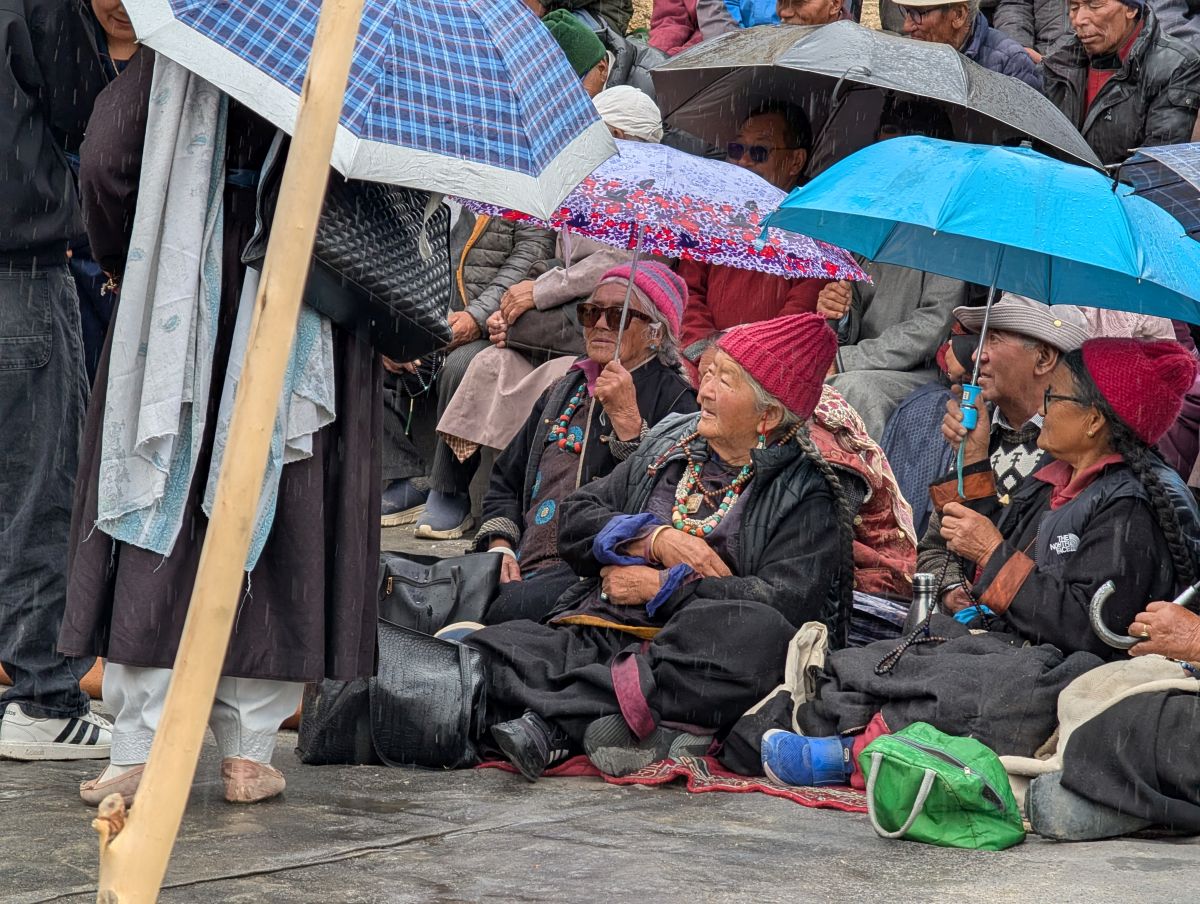
Rain swept through the courtyard during our visit, sending a silver haze across the monastery grounds. Spectators adjusted shawls and umbrellas, monks maintained their focus, and ceremonies proceeded according to a calendar shaped by centuries of practice.
That scene revealed one of the festival’s most striking qualities. Its pace follows tradition rather than contemporary pressures. Social media trends, tourism schedules, and digital timelines hold little influence here. The gathering operates according to a longer sense of time, one rooted in faith, memory, and collective experience.
Time spent with local residents highlighted another reality: cultural heritage survives through participation.
Lamayuru thrives because faith, landscape, and human relationships remain deeply connected. Those bonds continue to endure despite rapid changes reshaping mountain regions.
That broader context became impossible to ignore during later travels through nearby Wanla and along smaller roads winding above the monastery.
Ladakh is experiencing profound transformation. Expanding road networks connect settlements that once required days of travel. Tourism reaches valleys previously known mainly to local residents. Mobile networks and digital technology compress distance and accelerate communication. Economic opportunities emerge alongside complex questions about identity, development, and cultural continuity.
Within that environment, gatherings such as Yuru Kabgyat perform an important function, providing continuity amid change, strengthen relationships extending beyond village boundaries, and create opportunities for younger generations to experience inherited traditions directly.
Identity gains expression through shared practice rather than abstract discussion.
The festival’s significance rests less on age than on relevance.
Successful traditions adapt to changing circumstances while preserving a meaningful core. Yuru Kabgyat demonstrates that balance with remarkable clarity.
Ancient rituals remain vibrant because they continue serving present-day needs.
Visitors often leave Lamayuru with photographs of masks, costumes, monasteries, and dramatic mountain scenery. Those images capture genuine beauty, but my strongest memory emerged elsewhere.
I remember families sitting shoulder to shoulder beneath uncertain skies. I remember children watching the ceremonies with complete attention. I remember neighbours greeting one another after months apart. I remember monks performing rituals transmitted through generations. I remember a community renewing its connection to place and to itself.
That gathering felt older than any single dance and more enduring than any individual ceremony.
Eventually the performances concluded. Crowds dispersed, vehicles departed along mountain roads leading home, and daily life resumed within the monastery and surrounding villages.
But something remained behind.
The festival left a powerful impression that continuity still has a place within a rapidly changing world.
Certain communities continue creating space for belonging, and shared memory. Lamayuru accomplishes that through ritual, faith, and collective participation.
Perhaps that explains why people return year after year.
This article has been automatically published using a syndicated feed. The content is sourced externally and may not have been reviewed by The Freelancers Team.