


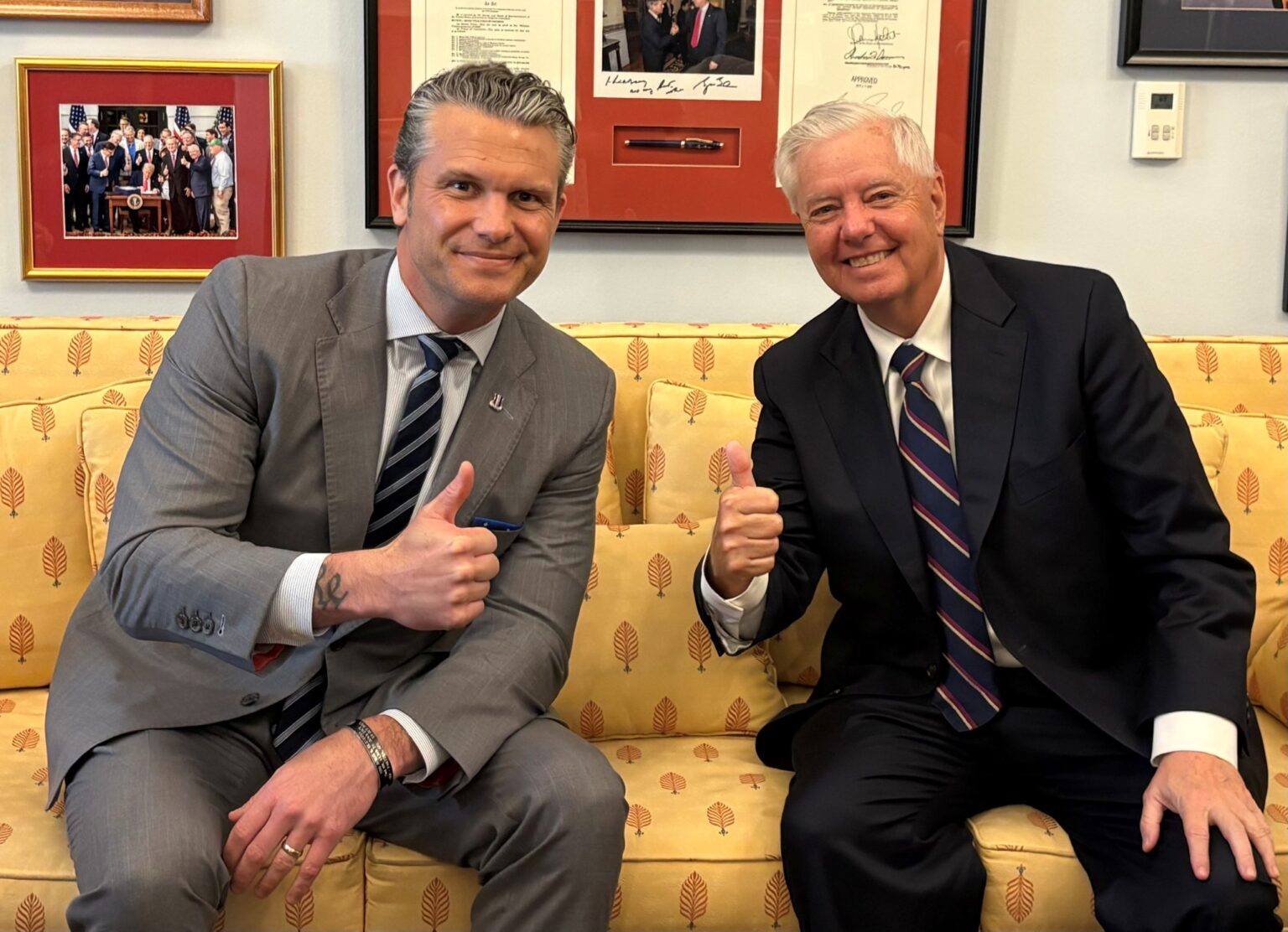
Washington– Lindsey Graham, one of America’s most influential foreign policy hawks, one of President Donald Trump’s closest allies and among Washington’s fiercest advocates of military action against Iran, died suddenly on Saturday after what his office described only as a “brief, sudden illness.” He was 71.
The announcement, made by Graham’s communications director on X early Sunday, provided few details beyond confirming that the South Carolina senator had died Saturday evening.
Within hours, tributes poured in from Washington, Jerusalem, Kyiv and NATO capitals. At the same time, the absence of an official explanation for the sudden death of one of America’s most prominant war hawks unleashed a flood of speculation across social media and sections of international media.
No US authority has indicated any evidence of foul play.
From Trump Critic to Closest Ally
Graham’s political journey was among the most dramatic in modern American politics.
After publicly clashing with Donald Trump during the 2016 Republican presidential race, Graham later became one of the president’s most loyal defenders and perhaps the administration’s most influential voice on national security.
A former Air Force lawyer who retired as a colonel from the Air Force Reserve, Graham spent more than two decades in the US Senate after first being elected in 2002.
He chaired the Senate Budget Committee and served on several powerful congressional committees dealing with appropriations, judiciary and national security.
Washington’s Loudest Iran Hawk
Few American politicians were more closely associated with a hardline policy toward Iran.
Graham strongly backed the 2003 invasion of Iraq and spent years arguing that military force should remain an option against Islamic Republic.
During the recent US-Israeli military campaign against Iran, he praised the naval blockade imposed on the country as “a very smart decision” and openly called for targeting Iran’s economy.
Speaking to NBC’s Meet the Press in May, Graham declared that negotiations with Tehran had “hit a wall.”
“There’s still more targets to be had. And there’s things we can do to hurt.”
He described Iran’s energy industry as the country’s “soft underbelly” and placed it “at the top of the list” of future targets.
His outspoken support for Israel made him one of the closest American allies of Prime Minister Benjamin Netanyahu.
On Sunday, Israel’s Defence Ministry mourned Graham as a leader “who stood with Israel in its most difficult time.”
Israeli President Isaac Herzog said he was “shocked and heartbroken.”
Tehran Shows No Sympathy
Iran’s state television greeted the news with undisguised jubilation, with a news presenter declaring: “I congratulate the Iranian nation on warmongering anti-Iran US senator Lindsey Graham being sent to hell.”
The remark, aired as breaking news, underscored how Graham had become one of the Islamic Republic’s most reviled American politicians.
Questions Begin Almost Immediately
The official announcement that Graham had died after a “brief, sudden illness” quickly gave rise to widespread speculation online.
Several reports suggested cardiac arrest may have been the immediate cause, but US authorities have not officially confirmed this.
West Asia News Agency (WANA) highlighted three theories circulating online.
One suggested—without presenting evidence—that Graham could have been the target of a foreign intelligence operation because of his prominent role in advocating military action against Iran.
Another speculated about possible domestic political motives linked to divisions within Republican circles.
A third pointed toward geopolitical tensions involving Israel and Iran.
None of these theories has been supported by evidence, and no US investigative agency has announced any indication of foul play.
No country or organisation has claimed responsibility or been linked by US authorities to Graham’s death.
US authorities have not announced whether any further information regarding the cause of his death will be made public.
America’s most recognisable war hawks
Leaders across NATO, Ukraine and Israel praised Graham as a steadfast supporter of transatlantic security and one of America’s most influential foreign policy figures.
Only days before his death, Graham had returned from Ukraine after meeting President Volodymyr Zelenskyy to discuss continued military assistance and tougher sanctions on Russia.
Whether admired as a patriot or criticised as one of Washington’s foremost interventionists, Graham remained one of the defining Republican voices on US foreign policy for more than two decades.
Polarising Figure
Graham also remained one of the most recognisable and polarising figures in American politics.
Supporters viewed him as a steadfast defender of American military strength and one of Washington’s strongest advocates for US alliances with Israel and NATO.
Critics, however, accused him of consistently favouring military intervention over diplomacy and of pushing the United States toward prolonged overseas conflicts.
His death comes at a moment of exceptional geopolitical tension, with conflicts involving Iran, Ukraine and the Middle East continuing to dominate the international agenda.
For now, one fact is clear: one of America’s most recognisable war hawks is gone.
This article has been automatically published using a syndicated feed. The content is sourced externally and may not have been reviewed by The Freelancers Team.