



By Lt Gen. R. S. Reen
The monsoon hits Jammu & Kashmir the same way it always does.
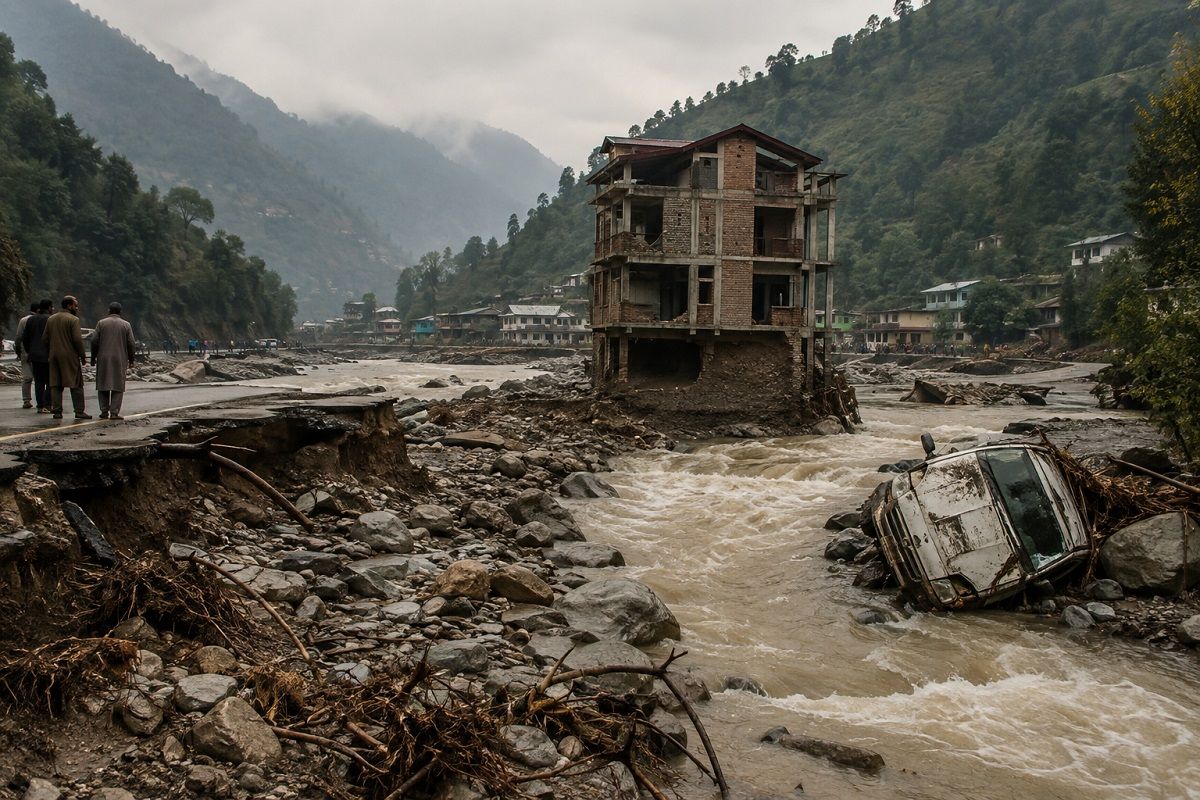
Clouds gather over the Pir Panjal, a cloudburst tears open a hillside, and within hours the valley becomes a scene of ruin.
Homes standing for generations collapse into mud. Cars get pulled off roads and smashed against rocks. Officials count bodies, open relief camps, and hand out promises of land for new houses.
A week later, the cameras leave, the bureaucracy exhales, and residents are told to hold on for a better future, one that supposedly hinges on Delhi finally settling the union territory’s constitutional status.
Call this what it is: not a weather emergency but a failure of engineering standards, sustained by decades of administrative excuse-making.
J&K was never built for careless construction. Its valleys run narrow, its rivers move with glacier-fed force, and its slopes sit on unstable ground.
Generations of residents understood this. They built on ridges, kept drainage channels open, and let riverbeds do their job during heavy rain. Modern development has thrown that knowledge out.
Hotels, concrete houses, and roads now crowd floodplains and natural drainage paths. Walls rise where water needs to move. Riverbeds narrow under rubble and unchecked ambition.
When the rain comes and finds no outlet, it crashes through doors and windows, and officials act stunned. They shouldn’t be.
Collapsed buildings and drowned vehicles are the predictable outcome of construction permitted in zones that should have been off-limits from the start.
Politicians bear real responsibility here. Land deeds get handed out in exchange for votes, with no engineering survey behind them, drainage plan, or safe road access.
Relief payments and rehabilitation packages meet an immediate human need, but when they substitute for real structural change, they solve nothing.
A family gets a new plot on the same unsafe ground their old house stood on, and the cycle resets for the next disaster.
Then there’s the second excuse, arguably more damaging than the first: the claim that drainage systems, flood alerts, and river-bank protection will improve once J&K’s political status gets resolved, whether that means continued Union Territory rule or a return to statehood. This is a dodge.
Clearing a storm drain before monsoon season, designing a bridge to hold a hundred-year flood load, testing concrete before it goes into a retaining wall: none of that depends on who signs off in Srinagar versus Delhi.
These are technical and managerial tasks rather than constitutional ones. Telling residents to wait for political clarity while their drains fill with garbage and their rivers fill with concrete is a failure of basic governance paraded as patience.
Having spent years as Director General of Quality Assurance in the defense sector, I recognize this failure immediately.
In defense work, a faulty component gets pulled before it costs a soldier’s life. Civilian infrastructure in J&K operates by no such standard.
A badly mixed concrete pillar, a bridge built with no hydrological study, and a road cut with no slope stabilization become death traps the moment a cloudburst hits.
Nobody removed them beforehand because nobody was checking.
What the valley needs is a Quality Assurance and Disaster Resilience Authority with real enforcement power rather than another advisory panel.
This body should inspect materials, certify construction in vulnerable zones only after a proper risk assessment, and hold contractors accountable when they cut corners.
Roads through landslide-prone terrain should have real culverts and slope retention instead of just fresh asphalt. Building on unstable slopes or marked floodplains should stop, regardless of who’s applying political pressure to allow it.
The fix demands remote-sensing surveys of every valley and floodplain to map encroachments, followed by the actual removal of structures blocking natural drainage rather than endless negotiation over timelines.
Families displaced by this process should get planned resettlement with drainage, sewerage, roads, and electricity built in from the beginning rather than another risky plot on a different unstable hillside.
Where engineers do need to channel water, they should design for peak flow capacity using real infrastructure instead of rubble walls thrown up in a panic.
None of this is theoretical. Countries with comparable mountain terrain manage these risks routinely.
J&K isn’t short on technical knowledge. It only lacks political will and institutional discipline.
Local panchayats, engineers, and residents who know which hillside slides and which nullah floods should drive mitigation plans directly, working alongside government rather than waiting on it.
The next monsoon will hit on schedule. Whether it finds cleared riverbeds and inspected buildings, or the same unchecked construction that killed people last year, is a choice officials are making right now.
Waiting for constitutional clarity has never cleared a single drain.
- The author is a graduate of REC/NIT Srinagar and a former Director General of the Directorate General of Quality Assurance under the Ministry of Defence. He is currently an advisor to Bharat Electronics Limited, and can be reached at [email protected].
This article has been automatically published using a syndicated feed. The content is sourced externally and may not have been reviewed by The Freelancers Team.