


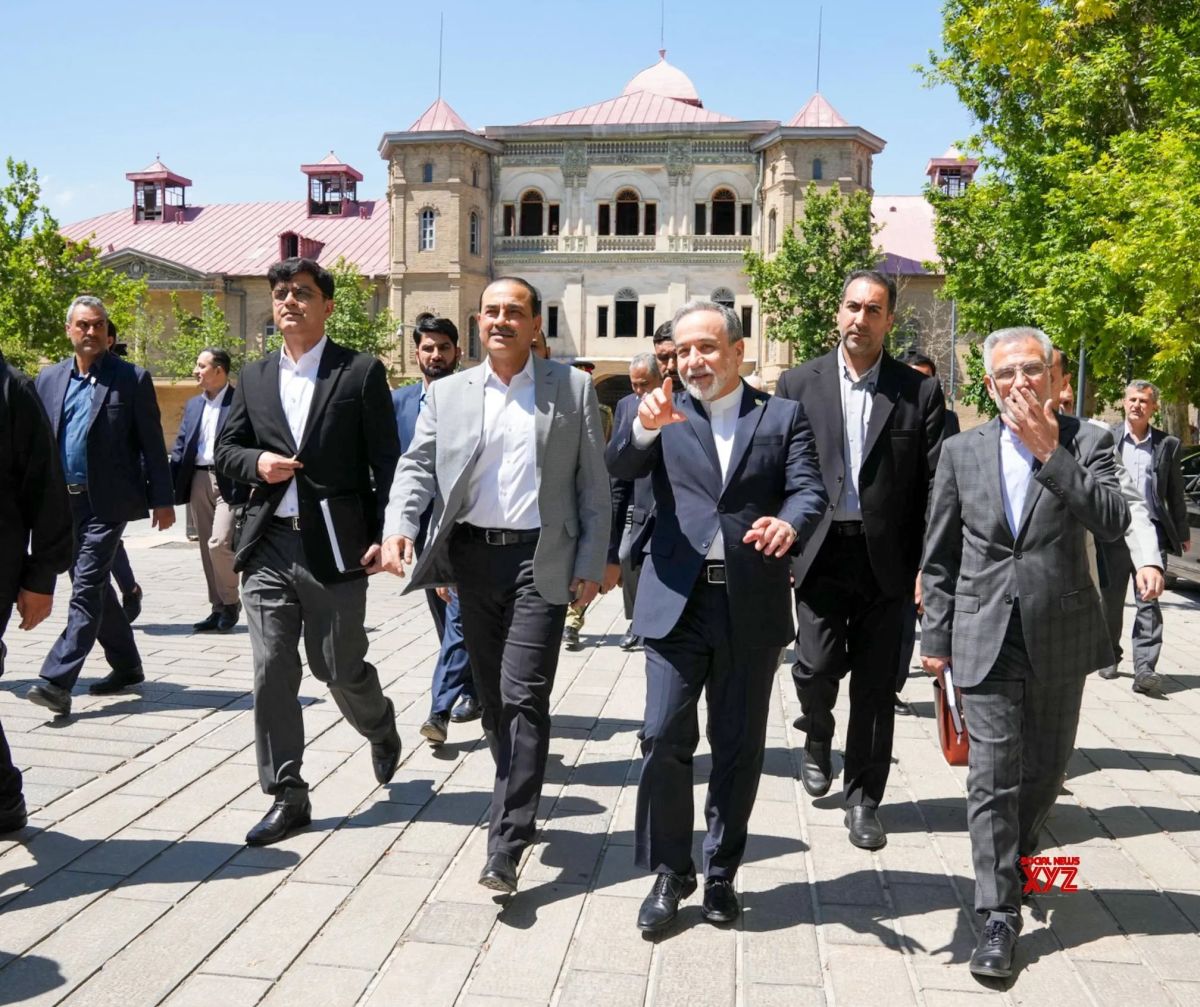
Tehran— Pakistan’s Army chief Field Marshal Asim Munir heads to Tehran on Monday carrying a diplomatic message of peace—but also the baggage of a new defence alliance with Saudi Arabia and Türkiye that has dramatically altered the regional equation.
Iran’s Foreign Ministry said Sunday that Munir will lead an official delegation to Tehran for talks with senior Iranian officials on bilateral and regional issues, including efforts to promote peace and security.
The timing could hardly be more sensitive
Just over two weeks ago, Pakistan joined Saudi Arabia and Türkiye in signing the Makkah Joint Defence Agreement, committing the three countries to collective defence and deeper military cooperation. An armed attack on one member is to be treated as an attack on all three. The pact also envisages coordination among defence and foreign ministers and military chiefs, as well as joint military exercises.
Although the agreement names no adversary, analysts see it as part of a wider regional realignment driven by the devastating US-Israeli war with Iran, attacks and counter-attacks across the Gulf and growing doubts among regional powers about the durability of traditional American security guarantees. Iran and its regional network are widely viewed as an important factor behind the new security calculations.
For Pakistan, that creates an uncomfortable contradiction
Islamabad now belongs to a trilateral defence arrangement with Saudi Arabia — Iran’s principal regional rival — and Türkiye, while simultaneously seeking to maintain its longstanding ties with Tehran and revive its role as a bridge between Iran and Washington.
Munir’s visit will therefore be watched closely in both Ankara and Riyadh.
From battlefield tensions to a new regional bloc
The Makkah pact did not emerge in a vacuum.
The region has spent months under the shadow of direct US-Iran confrontation, attacks on American military bases across the Gulf region, disruption around the Strait of Hormuz and fears that the conflict could engulf neighbouring states. Gulf countries have increasingly sought greater control over their own security arrangements, while Türkiye has sought a larger strategic role in the reshaping of the Middle Eastern order.
The result is a new security architecture in which Saudi financial power, Turkish military-industrial capacity and Pakistan’s military experience are being brought together.
The pact has consequently been described as a possible new strategic pole in West Asia, even though its signatories insist that it is defensive and does not target any particular country.
That distinction will matter enormously when Munir sits down with Iranian officials.
Pakistan caught between partners
Pakistan has strong reasons to avoid being seen as part of an anti-Iran coalition.
Iran is its immediate western neighbour, shares a long border with Pakistan and remains an important economic and security partner. Islamabad also has an interest in preventing instability along its Balochistan frontier and avoiding any spillover from the regional conflict.
At the same time, Saudi Arabia is one of Pakistan’s closest strategic and economic partners, while Türkiye has emerged as an increasingly important defence partner.
The Makkah agreement has deepened those commitments.
Munir was central to Pakistan’s role in finalising the pact alongside Prime Minister Shehbaz Sharif, making his appearance in Tehran particularly significant.
The mediation gamble
Pakistan has nevertheless been trying to carve out a diplomatic role.
An earlier US-Iran understanding brokered with Islamabad’s involvement was intended to create space for renewed negotiations, but the process collapsed as military tensions escalated again.
Munir’s Tehran visit comes as Islamabad makes another attempt to bring the two sides back towards dialogue.
Iranian Foreign Ministry spokesman Esmaeil Baqaei said the visit would focus on strengthening Tehran-Islamabad cooperation and supporting Pakistan’s efforts to promote regional peace and security.
Munir also spoke with Iranian Foreign Minister Abbas Araqchi by telephone on Saturday, discussing regional developments and ways to strengthen peace, stability and security.
Pakistan Interior Minister Mohsin Naqvi visited Tehran earlier this month and met Iranian President Masoud Pezeshkian and Araqchi.
A difficult line to walk
The challenge for Islamabad is no longer simply mediating between Washington and Tehran.
It is also convincing Tehran that its new defence commitments to Riyadh and Ankara do not amount to Pakistan taking sides against Iran.
For Saudi Arabia and Türkiye, meanwhile, Pakistan’s continuing engagement with Tehran could be presented as evidence that the Makkah pact is a stabilising, rather than confrontational, arrangement.
That gives Islamabad a potentially valuable diplomatic role — but also leaves little room for error.
Munir arrives in Tehran at a moment when Pakistan needs Saudi Arabia and Türkiye for strategic partnership, Iran for neighbourhood stability and diplomacy, and Washington for economic and geopolitical engagement.
The Army chief’s mission may therefore be less about choosing sides than demonstrating that Pakistan can remain on speaking terms with all of them.
And that may be the real test of the Makkah pact’s first major diplomatic challenge.
This article has been automatically published using a syndicated feed. The content is sourced externally and may not have been reviewed by The Freelancers Team.