


A weaver in Srinagar’s old city can still turn raw pashm into a shawl fine enough to pull through a ring, a skill passed down since the workshops Sultan Zain-ul-Abidin encouraged nearly six centuries ago.
That shawl may sell in Delhi or Paris for a sum the weaver never sees written on a receipt of his own.
This divide, between what Kashmir makes and what Kashmir keeps, says more about the valley’s economy than any story about missing talent or missing effort.
Start with the numbers, because they are blunt.
Jammu and Kashmir’s per-capita income for 2025-26 is estimated near ₹1,68,243, against a national figure close to ₹2.27 lakh. The region’s output is roughly 26 percent below the country’s, even as its Gross State Domestic Product touches ₹2.8567 lakh crore and grows at a genuinely healthy 5.82 percent after inflation.
J&K’s population was about one percent of India’s in the 2011 Census, but it produces closer to 0.8 percent of national output.
Growth is real, but the share of what that growth returns to ordinary households is not.
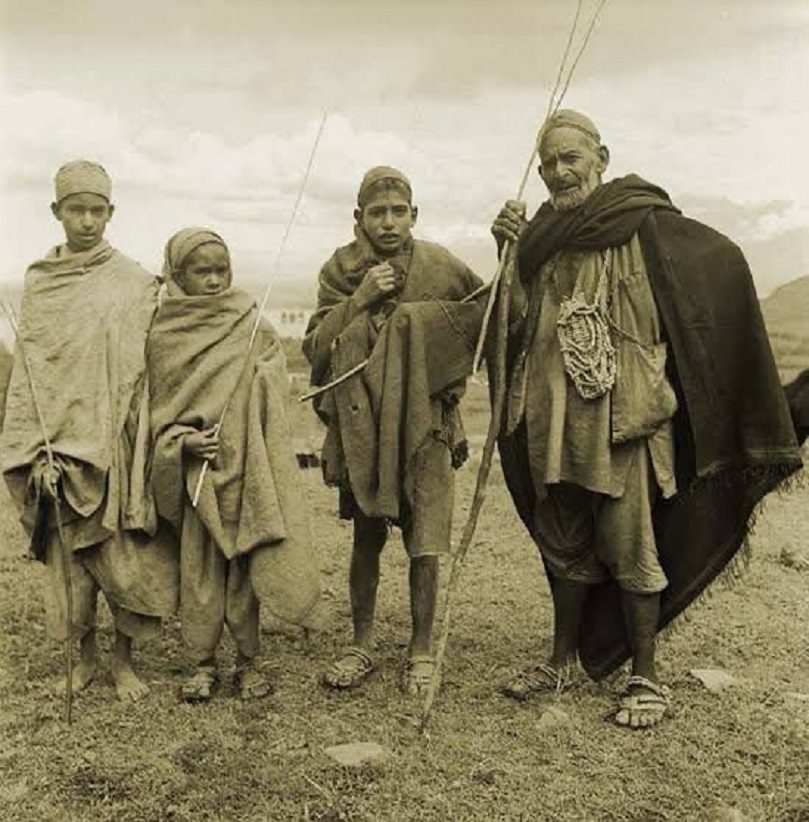
It helps to clear away one story first. The claim that Kashmiris once wore “one pajama for four persons” is an exaggeration that has calcified into folk memory, rather than a fact of history.
What families actually wore were pherans and woollens, layered against a mountain winter, practical enough to hold a kangri underneath.
Poor households patched and reused clothing, as poor households did across the subcontinent before Independence, when the National Planning Committee of 1936 catalogued shortages of food, housing and cloth from Punjab to Bengal.
Kashmir’s poverty was real, but it was not unique, and it was not the poverty of a people without craft.
The craft was, if anything, the problem’s other face.
Mir Sayyid Ali Hamadani’s influence on Kashmiri weaving and embroidery, and Zain-ul-Abidin’s patronage of silk, carpets, paper-making and canal-fed farmland, built a valley capable of producing goods that travelled to Central Asia and Persia on the strength of their quality alone.
But a shawl sold at a princely price abroad did not translate into a weaver’s security at home.
Casual labourers earned roughly four to six annas a day before 1941, and the famine of 1877-79, layered onto a collapse in shawl demand, pushed artisan families deeper into debt.
Beauty was exported, but precarity stayed.
Literacy tells the same story in a different register. Around 1941, roughly 16 of every 100 Indians could read. In J&K, the figure was closer to 7. Female literacy in the state was near 2.3 percent.
A region entering 1947 with that few trained teachers, clerks, doctors and administrators was always going to need decades to build the institutions a modern economy depends on, regardless of how fertile its soil or fine its embroidery.
The land reforms that followed were not cosmetic.
Jagirs, muafis and mukararidar rights were abolished in 1948. The 1950 Big Landed Estates Abolition Act set a ceiling of about 182 kanals, roughly 22.75 acres, and by the government’s own accounting affected some 9,000 large landholders, moving around 4.5 lakh acres above the ceiling and transferring 2.3 lakh acres toward cultivators.
By April 1953, close to 1.93 lakh acres had been formally attested in favour of about 1.61 lakh tillers. Sheikh Abdullah’s Naya Kashmir programme reset the social floor of the economy, and it should be credited for that.
But the average allotment came to roughly 1.23 acres per beneficiary, enough for a household to plant its own name on a field, not enough to finance an orchard’s modernisation, a child’s college fees and the next generation’s employment all at once.
What came after was genuine and hard-won.
Literacy climbed from about 7 percent before Independence to 67.16 percent by 2011, narrowing a disparity that had once been nearly ten points to roughly 6.9.
Roads, tunnels, hospitals and electricity reached villages that had known only footpaths and ponies. Union transfers to J&K were budgeted at ₹41,000 crore for 2025-26 and are projected near ₹43,290 crore the following year. Samagra Shiksha alone carried a work plan above ₹2,325 crore.
None of this is small, and none of it should be waved away by anyone arguing that Kashmir has been neglected.
Money for salaries, pensions and school buildings does not, on its own, build an export brand. That is the distinction the spending figures obscure.
Services account for 61 percent of J&K’s gross value added. The secondary sector, which includes manufacturing, sits at just 18.52 percent. Horticulture supports around 7 lakh families and 35 lakh people, and tourism drew 1.78 crore visits in 2025, yet apples, walnuts and saffron still leave the valley half-finished, to be graded, packaged, branded and marked up somewhere else.
A farmer who grows the fruit rarely owns the cold store that decides its final price.
Tamil Nadu, which posted 9.69 percent real growth in 2024-25 and exported more than $46.5 billion, offers no template Kashmir can copy. It has a coast, ports and a manufacturing base Kashmir’s geography will never replicate.
What it demonstrates instead is what value addition looks like when it stays home: processing, branding, logistics and finance built close enough to the raw material that the profit does not have to travel far to find its owner.
Families who sell orchard land for a hospital bill or a daughter’s wedding are not always behaving irrationally. They are meeting an emergency with the only asset that moves quickly.
The danger lies in what happens to the money afterward, when it funds a season of expenses rather than a workshop, a cold store or a small firm that outlives the crisis that created it.
Rising land prices look like prosperity on a ledger and can still leave the next generation with less productive ground to stand on than their parents had.
Kashmir finished its first transformation when the tiller got the field. Its second transformation, unfinished and less visible in any budget line, is the one that decides whether the shawl, the apple and the saffron thread finally belong, all the way to the till, to the hands that made them.
This article has been automatically published using a syndicated feed. The content is sourced externally and may not have been reviewed by The Freelancers Team.