


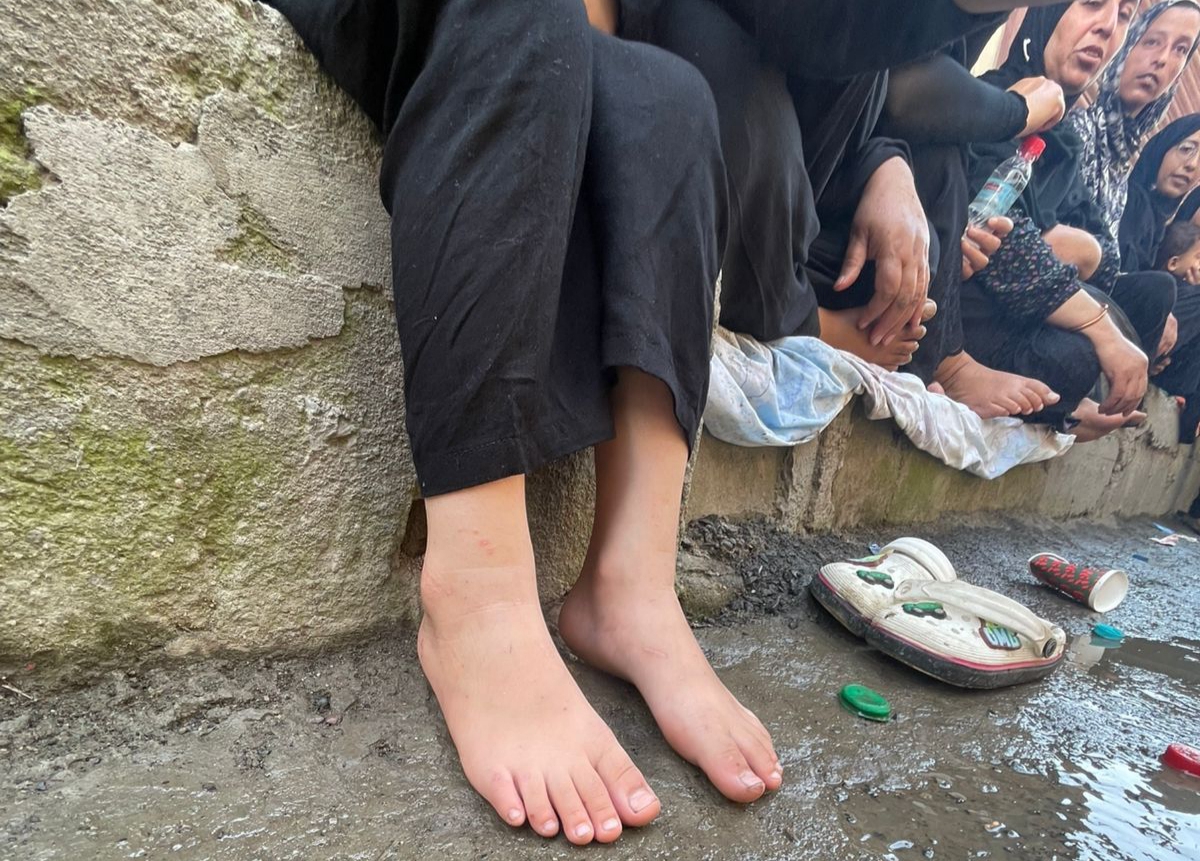
Warm asphalt pressed against bare feet as women entered Zadibal on Ashura morning, joining thousands of mourners in Srinagar’s oldest Muharram neighbourhood.
Black banners hung above narrow lanes, covering shopfronts and linking homes that have witnessed generations of mourning.
Marsiyas floated through loudspeakers before merging with voices rising from the procession.
Men formed disciplined rows for lament, while women settled along verandas, outside homes and beside the route, creating another layer of remembrance that unfolded alongside the public ritual.
Ashura has long transformed Zadibal into the spiritual centre of Muharram observances in Kashmir. Families reached the neighbourhood early, hoping to secure a place before crowds filled the streets.
Wooden balconies overlooking the procession held elderly women who followed elegies from beginning to end. Mothers sat with young children, pointing toward black standards moving through the crowd. Teenage girls stood beside sisters and cousins, softly reciting nohas learned through years of participation.
Several women chose to walk barefoot through the heated lanes. Their steps showed devotion inspired by the suffering endured by Imam Hussain (A.S.), his family and companions after the Battle of Karbala.
The summer sun was harsh, though people’s minds remained fixed on Karbala. Volunteers kept moving through the crowd, handing out water to mourners standing in the heat. The procession filled the streets, while homes opened their doors to another side of Ashura.
Homes throughout Zadibal welcomed women gathering for female majalis, where prayers, religious sermons and elegies continued throughout the day. Kitchens remained active as families prepared tea, water and meals for visitors and mourners. Relatives moved between homes and the procession, keeping both spaces connected through shared remembrance.
Those gatherings also helped keep the story of Karbala alive within families.
Stories of Bibi Zainab passed naturally between generations, linking grandmothers, mothers and daughters through memory, faith and lived tradition. Children listened while older women recalled events of Karbala with depth and detail, ensuring that religious history remained part of family life rather than only public observance.
One participant described Ashura as both spiritual reflection and personal instruction.
“Yom-e-Ashura teaches us patience,” she said. “It teaches gratitude for what we have. When we remember Karbala, our own hardships appear smaller.”
She explained that many women spend much of Ashura inside homes rather than within the procession itself.
“They prepare food for mourners, recite nohas, remember the suffering of Bibi Zainab (S.A.) and keep the message of Karbala alive within families.”
Her words captured life in Zadibal on Ashura.
The procession drew thousands into the streets, while homes kept the traditions alive through majalis and family gatherings. Women stood at the centre of both through prayer, service, teaching and remembrance.
Another moment revealed the deeply personal bond many participants maintain with Ashura.
A woman in her seventies spent hours trying to find a place where she could hear the marsiya clearly. Crowds had filled almost all the available space by the time she reached Zadibal.
Before leaving, she asked someone to record the recitation on a mobile phone. She wanted to take the elegy home with her.
Young people filled the gathering in large numbers. Boys carried black standards taller than themselves, while girls stood beside mothers and grandmothers, learning prayers, elegies and rituals simply by taking part.
Ashura became a living classroom where tradition passed naturally from one generation to the next.
Older participants frequently discussed recent developments involving Iran while standing beneath shaded shopfronts and along the procession route.
Many linked contemporary events with the moral lessons they associate with Karbala, viewing Imam Hussain’s stand against oppression as a continuing guide for understanding present-day challenges.
Those discussions illustrated how historical memory continues to influence religious thought and public discourse among many participants.
As the afternoon sun softened, the procession continued through Zadibal with resolve. Volunteers passed water to mourners standing in the heat. Mothers watched their daughters join the observance, while grandmothers sang dirges that had echoed through their families for generations.
By evening, the crowds began to thin and people slowly made their way home. Black banners still hung above the narrow lanes, and many homes remained open as relatives and neighbours gathered for prayers and remembrance.
Among the last to leave were barefoot girls, carefully making their way over hot asphalt, wet patches left by volunteers and crowded lanes.
Their walk to remembrance followed a story that began in the desert of Karbala more than 13 centuries ago.
With each step, another generation kept that memory alive.
This article has been automatically published using a syndicated feed. The content is sourced externally and may not have been reviewed by The Freelancers Team.