


By Neelufar Raminfar
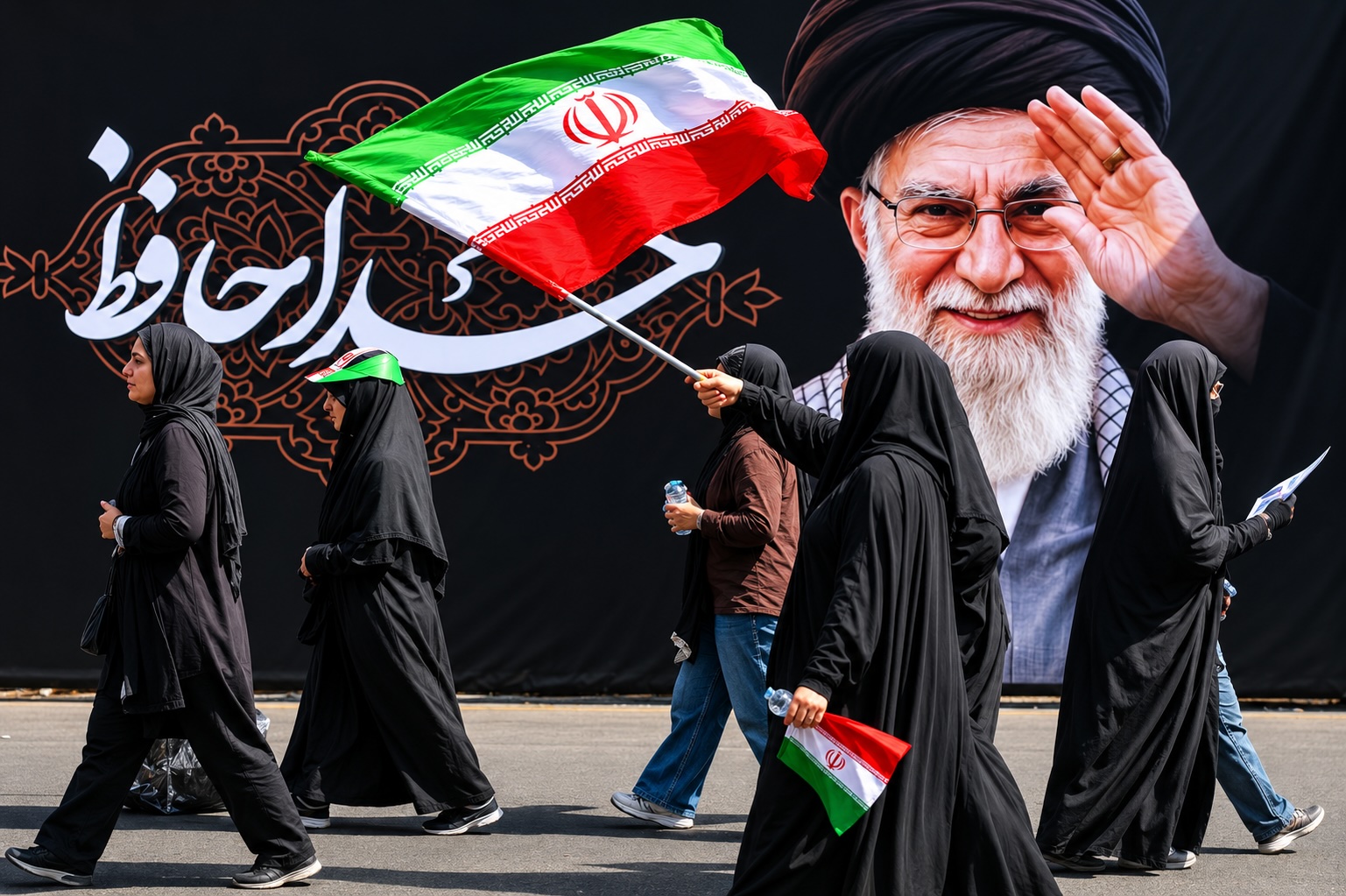
Tehran – Long before dawn broke over Tehran, thousands of mourners had already gathered outside the sprawling Imam Khomeini Grand Mosalla. Some had spent the night on pavements, clutching Iranian flags, Qurans and portraits of Ayatollah Seyyed Ali Khamenei, determined to be among the first to bid farewell to the man who led the Islamic Republic for nearly four decades.
Hours before the gates officially opened, the vast prayer complex was overflowing, with roads leading to the Mosalla packed with mourners streaming in from across Iran.
What began on Saturday was not merely the start of a funeral.
It marked the opening of what Iranian authorities describe as one of the largest farewell ceremonies in modern history—a six-day journey that will carry the coffins of Ayatollah Khamenei and four members of his family across two countries and six sacred cities before the final burial in Mashhad.
The ceremonies, already drawing unprecedented crowds, are expected to culminate in the participation of millions in Tehran, Qom, Najaf, Karbala and Mashhad.
Organisers said the funeral was designed not only as a state ceremony but also as a massive public farewell reflecting what they described as the enduring bond between the late leader and the Iranian people.
“The most important element of these ceremonies is the people themselves,” officials said, pointing to the sea of mourners that had already surrounded the Mosalla hours before the programme began.
The public phase follows Friday’s international tribute attended by presidents, prime ministers, parliamentary speakers, senior clerics, academics, resistance leaders and official delegations from scores of countries.
According to the National Headquarters for the Farewell and Funeral Ceremonies, dozens of foreign delegations participated in the opening events, ranging from heads of state and government to ministers, special envoys and parliamentary leaders.
Iman Attarzadeh, spokesperson for the organising committee, said preparations for the ceremonies had begun immediately after Ayatollah Khamenei was killed but were delayed because of wartime security conditions.
Throughout every stage of the journey, the coffin of the late leader will be accompanied by those of four members of his family, including the tiny coffin of his 14 month old granddaughter, who were killed in the same attack.
The first public ceremonies are being held at Tehran’s Imam Khomeini Mosalla on July 4 and 5 before the massive funeral procession through the Iranian capital on July 6.
From Tehran, the funeral will move to the holy city of Qom before taking an unprecedented international turn.
On July 7, the cortege will cross into Iraq, where ceremonies are scheduled in the shrine cities of Najaf and Karbala.
According to organisers, the coffin will be carried through the shrine of Imam Ali in Najaf before commemorative ceremonies continue at the shrines of Imam Hussain and Hazrat Abol Fazl Abbas in Karbala.
The final stage of the journey will unfold in Mashhad on July 8, where Ayatollah Khamenei will be laid to rest near the shrine of Imam Reza after final prayers and a concluding public procession.
Observers here describe the cross-border funeral as unprecedented, linking the three holiest shrine cities of Shia Islam—Najaf, Karbala and Mashhad—in a single farewell journey.
Authorities say the massive public participation represents not only a final tribute to the late leader but also a renewed pledge of allegiance to the ideals of the Islamic republic.
Ayatollah Khamenei was assasinated on February 28 in a joint American-Israeli attack on his residence that also claimed the lives of several members of his family, senior officials and civilians.
The attack triggered a regional war that saw Iran launch more than massive retaliatory strikes against American and Israeli strategic targets across the region.
During the war, Tehran imposed restrictions on shipping through the Strait of Hormuz, disrupting global energy supplies before the United States announced a unilateral ceasefire on April 7.
Now, more than four months later, Tehran has transformed into the epicentre of a farewell that political observers say will be remembered not only for its scale but also for its symbolism—a funeral stretching across borders, linking sacred cities and bringing together millions of mourners and international dignitaries in one of the most consequential public ceremonies in the history of West Asia.
This article has been automatically published using a syndicated feed. The content is sourced externally and may not have been reviewed by The Freelancers Team.