



Srinagar- Apple productivity in Jammu and Kashmir has recorded a decline while almond cultivation has witnessed a significant contraction, even as the region’s overall fruit production has grown more than fivefold since 1980, according to a NITI Aayog roadmap for development of the horticulture sector.
The findings are part of the “Roadmap for Horticulture Development in the UT of Jammu and Kashmir @ 2047”, which examines the changing structure, productivity and challenges facing the Union Territory’s horticulture economy.
According to the report, the area under fruit cultivation increased from 1.31 lakh hectares in 1980 to 3.44 lakh hectares in 2022, while fruit production rose from 5.6 lakh tonnes to 27.22 lakh tonnes during the same period.
However, productivity increased from 4.3 tonnes per hectare to 7.91 tonnes per hectare, indicating that a substantial part of the increase in production has come through expansion of cultivated area rather than a comparable increase in productivity.
The report notes that the scope for further expansion of cultivated area is now limited, making improvements in productivity increasingly important for future growth of the sector.
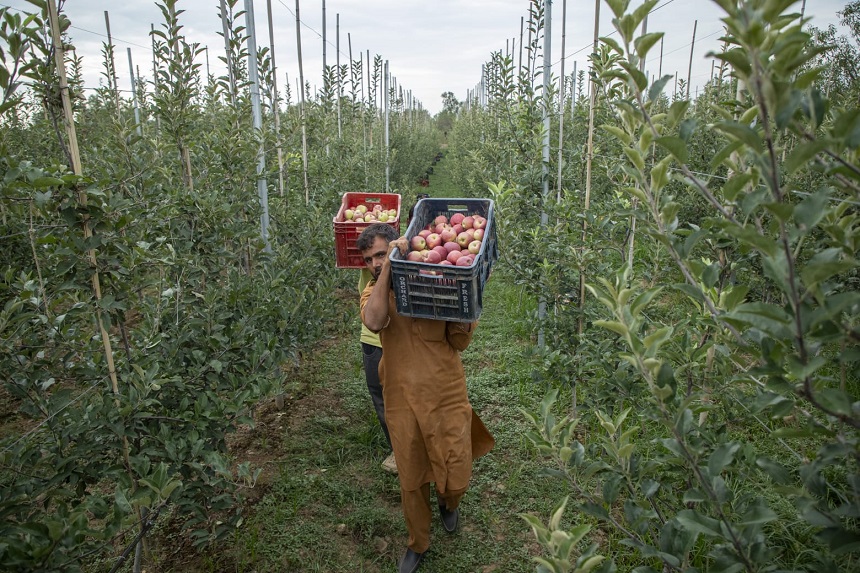
Apple, which accounts for around half of J&K’s total fruit cultivation area and more than three-fourths of its fruit production, has shown signs of declining productivity.
NITI Aayog has recorded a negative compound annual growth rate of 0.37 per cent in apple productivity between 2020-22 and 2022-23.
The report also highlights a significant decline in almond cultivation in Jammu and Kashmir. The area under almond cultivation has declined by around 10,000 hectares, with the contraction becoming particularly pronounced in recent years.
The findings raise concerns over the sustainability of two important components of J&K’s horticulture economy, particularly as farmers face changing climatic conditions, evolving market requirements and rising production costs.
NITI Aayog has recommended a range of measures to improve horticulture productivity, including the adoption of high-density plantations, improved planting material, better varieties, modern orchard management practices and stronger extension services.
The roadmap also stresses the need to improve post-harvest infrastructure, processing, storage and market linkages so that higher production translates into greater income for growers.
With horticulture supporting the livelihoods of a large population in Jammu and Kashmir, the report underlines the need to shift the focus from simply expanding the area under cultivation towards improving productivity, value addition and the resilience of orchards. [KNT]
This article has been automatically published using a syndicated feed. The content is sourced externally and may not have been reviewed by The Freelancers Team.