


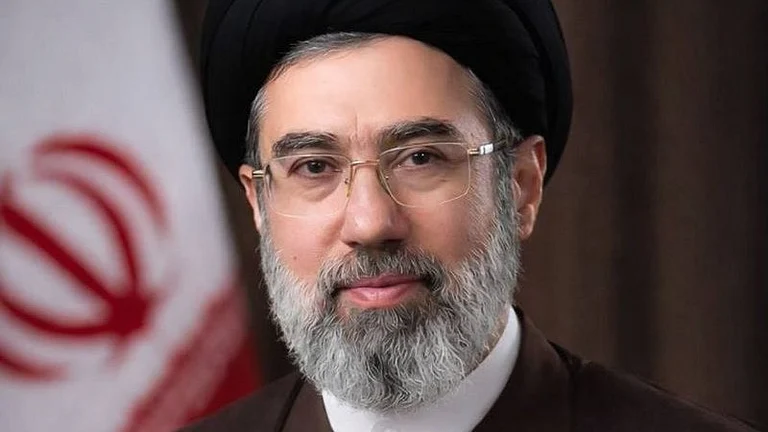
Tehran: Iran’s Supreme Leader Mojtaba Khamenei called on Muslim nations to strengthen cooperation and help shape a new regional and global order beyond U.S. influence, saying changing geopolitical realities signaled a decline in American dominance across West Asia.
In a message issued on Tuesday to mark the Day of Arafah during the annual Hajj pilgrimage, Khamenei said countries across the Muslim world possessed shared capacities and interests that could form the basis of a new political and strategic framework for the region.
“The future belongs to the Muslim Ummah and the new Islamic civilisation,” he said, according to the message released by Iranian authorities.
Khamenei said regional developments had entered an irreversible phase and argued that U.S. military influence in West Asia was weakening.
“The hands of time will not turn back,” he said, adding that countries in the region would no longer serve as “shields” for American military bases and suggesting Washington was steadily losing its strategic position.
“The United States will no longer have a safe haven for its mischief and for establishing military bases in the region” and was “growing more distant from its former status day by day,” he added.
The remarks come at a time of heightened tensions across West Asia following months of conflict involving Iran, Israel and the United States, and amid continuing uncertainty over regional security arrangements and energy routes.
The Iranian leader also praised what he described as the role of the “Resistance Front” — a network of Iran-aligned movements operating across several countries — saying it had challenged U.S. influence, confronted Israel and fought extremist groups like Daesh.
He described the alliance as extending across countries, including Lebanon, Palestine, Iraq, Syria, Yemen and Afghanistan.
Khamenei sharply criticised Israel, describing it as an unstable state nearing decline. Iranian leaders have repeatedly voiced opposition to Israel and support for Palestinian causes, rhetoric that has intensified following recent regional conflicts.
The message also referred to Iran’s recent confrontation with the United States and Israel, claiming Tehran had successfully resisted pressure and inflicted significant costs on its adversaries.
Khamenei praised Iran’s armed forces and allied groups for what he called major achievements during the conflict, saying Iran had resisted attempts to force it into concessions.
The Iranian leader further linked current events to the broader ideological foundations of the 1979 Islamic Revolution, portraying Hajj not only as a religious ritual but also as a symbol of political solidarity, resistance and unity among Muslims.
Addressing Iranian pilgrims, he urged them to share what he described as Iran’s experience of resilience and resistance with Muslims from other nations attending Hajj.
The message described Hajj as a continuous path of devotion, rejection of false powers, self-purification, and defence of truth and justice.
The message also reiterated Iran’s longstanding political doctrine of opposition to perceived foreign domination and support for Palestinian causes, themes that have remained central to the country’s regional policy for decades.
Iranian leaders have frequently framed regional developments as evidence of a shifting geopolitical balance, though analysts remain divided over the extent to which U.S. influence in the region has diminished amid continued American military and diplomatic engagement across West Asia.
This article has been automatically published using a syndicated feed. The content is sourced externally and may not have been reviewed by The Freelancers Team.