



Joanna Houston knew her son spent time on YouTube at school, but the scale simply surprised her.
School records showed that her sixth-grade son in Richmond Hill, Georgia, watched more than 1,500 noneducational YouTube videos on his Chromebook between August and January.
Much of that viewing took place during school hours, turning a device intended for learning into a portal for entertainment.
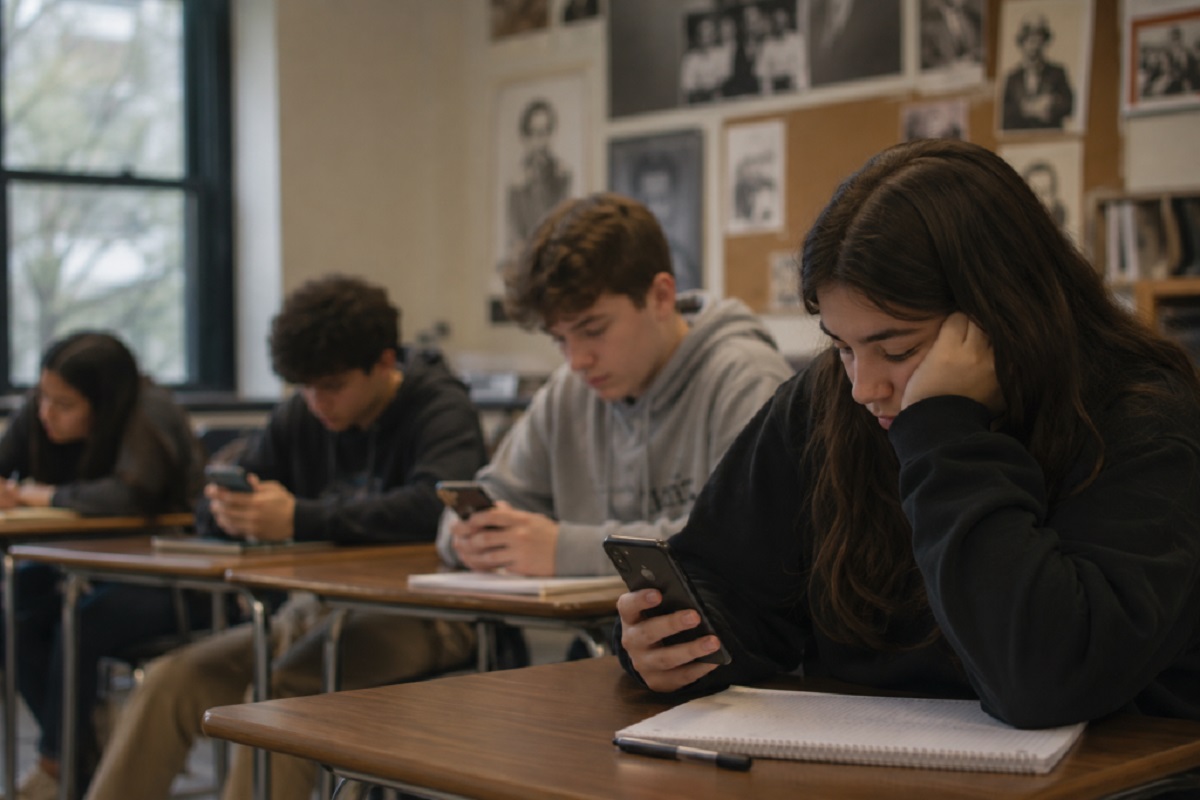
Houston’s discovery shows a growing concern inside American schools. Teachers, parents and administrators increasingly describe classrooms as battlegrounds where lessons compete with notifications, videos and social media feeds designed to capture attention.
Newly disclosed internal documents, reviewed by The New York Times through lawsuits filed by more than 1,400 school districts, provide an unusually detailed look at how major technology companies pursued young users during the school day.
The records show social media platforms reaching students in classrooms while educators, parents and company safety teams voiced concerns about academic disruption.
Snapchat sent prompts encouraging teenagers to post updates during school hours. Meta recruited high school students to promote Instagram among their peers. TikTok weighed proposals that would limit notifications during class time and ultimately moved in another direction. Google employees discussed ways to increase YouTube viewing during weekdays, even as education teams worried that students drifted from schoolwork into unrelated content.
The disclosures came as schools rethink their relationship with technology.
Smartphone bans have spread through districts nationwide. Administrators are reassessing digital learning tools that became central during the pandemic. Public debate, once focused largely on mental health, now centers on attention, concentration and learning.
School districts argue that platforms built around engagement have imposed substantial educational costs. Teachers describe constant competition with apps that provide an endless stream of personalized entertainment.
Court filings suggest the financial stakes could prove enormous. Breathitt County Schools in rural Kentucky served as the first major test case.
The district sought funding for long-term educational and mental health programs. Meta, Snap, TikTok and Google eventually agreed to pay a combined $27 million to settle the case.
Several larger districts continue to pursue claims worth hundreds of millions or even billions of dollars.
The documents also illuminate how companies viewed teenage users.
Years before social media faced widespread public scrutiny, executives openly discussed the importance of attracting adolescents.
Shortly after Snapchat launched in 2012, co-founder Evan Spiegel celebrated the app’s popularity among high school students and highlighted heavy activity during school hours.
Meta pursued students through a structured ambassador program. Internal documents described schools as a critical pathway to winning teenagers. Student representatives received branded merchandise and gift cards while promoting Instagram among classmates.
Google’s approach centered on education technology. Chromebooks became a fixture in American schools during the past decade, particularly after remote learning expanded device use. Internal presentations described schools as an opportunity to introduce children to Google’s broader ecosystem.
Tension emerged inside the company itself.
Education teams promoted instructional content and classroom tools. Other employees focused on increasing YouTube viewership. Internal presentations showed how students searching for educational videos could quickly receive recommendations for entertainment content.
Warnings also surfaced inside social media companies.
At Snapchat, employees questioned features that encouraged students to post during the school day. At TikTok, safety teams pushed proposals that would disable notifications for minors during school hours. Internal discussions weighed those concerns against business goals tied to user engagement.
One TikTok employee summarized the likely reaction from educators while discussing a feature that urged users to post within minutes.
“Teachers are going to hate it,” the employee wrote.
School leaders frequently expressed similar concerns. Administrators described bullying, inappropriate images and disciplinary challenges linked to social media use. One superintendent characterized Snapchat as the leading source of student drama.
The documents reveal another dimension of the industry’s influence: partnerships with parent organizations.
TikTok provided millions of dollars to the National PTA through sponsorship agreements tied to online safety programs and public outreach efforts. Internal communications discussed improving public perception among parents during a period of growing scrutiny.
Those relationships sparked debate among local leaders who participated in sponsored events.
Some welcomed resources devoted to internet safety, others questioned whether the programs served educational goals or corporate interests.
The lawsuits will play out over years.
Schools have already begun making decisions of their own: phone restrictions are expanding, digital policies are tightening, and classroom technology faces fresh examination.
Students entered the digital age carrying powerful devices into school. Internal records now suggest that classrooms also became one of the technology industry’s most valuable frontiers in the competition for attention.
- This story is based on reporting by Jennifer Valentino-DeVries for The New York Times. Excerpts are included for informational and journalistic purposes, with full credit to the original source.
This article has been automatically published using a syndicated feed. The content is sourced externally and may not have been reviewed by The Freelancers Team.