



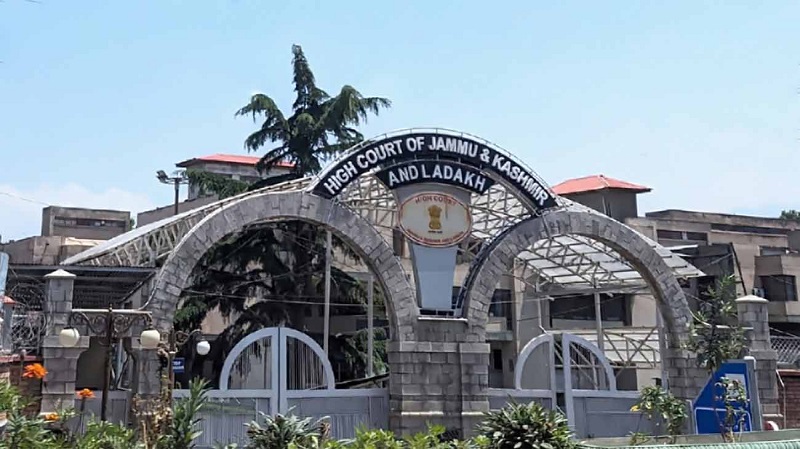
Srinagar- Acting on the Supreme Court’s concern over the prolonged incarceration of undertrial prisoners, the High Court of Jammu and Kashmir and Ladakh has launched a major exercise to fast-track long-pending criminal trials across the two Union Territories, identifying the 15 oldest cases for priority disposal and directing all trial courts to expedite proceedings involving accused who have spent years behind bars awaiting the conclusion of their trials.
The directions were issued by the Registrar General of the High Court in compliance with the Supreme Court’s order dated April 21, 2026, in the Special Leave Petition (Criminal), Anoop Singh vs Union Territory of J&K.
Apart from identifying the 15 oldest pending criminal cases for time-bound disposal, the High Court has also circulated district-wise details of hundreds of undertrial prisoners lodged in jails across Jammu and Kashmir and Ladakh who have remained in custody for more than five years without their trials being concluded.
The exercise covers virtually every district of the two Union Territories, including Srinagar, Jammu, Baramulla, Kupwara, Bandipora, Budgam, Ganderbal, Pulwama, Shopian, Doda, Kishtwar, Ramban, Rajouri, Poonch, Kathua and Samba. The cases involve offences under the RPC/IPC, the Unlawful Activities (Prevention) Act, the NDPS Act, the Arms Act, the Explosive Substances Act, the POCSO Act, the Foreigners Act and other criminal laws.
While many undertrials have spent between five and seven years in custody, several have remained incarcerated for eight to 10 years, a significant number have crossed 12 to 15 years, and a few have spent nearly 18 years in prison without the completion of their trials.
As part of the immediate exercise, the High Court has directed the Presiding Officers of the 15 identified cases to prepare case-specific schedules and conclude the trials within fixed timelines ranging from a few months to three years, depending on the stage and complexity of each case.
The oldest among them is FIR No. 16/2007 registered at Police Station Nishat under Sections 364, 342, 302 and 120-B of the RPC, in which an accused has remained in judicial custody for 17 years and 10 months. The Fourth Additional District and Sessions Judge, Srinagar, has been directed to conclude the trial within four to five months.
Another priority case is FIR No. 6/2014 registered at Police Station Uri under the NDPS Act, where the accused has completed 12 years and two months in custody. The trial court has been asked to conclude the proceedings within six months.
The monitored cases also include FIR Nos. 342/2010 and 201/2009 of Police Station Doda, where the accused have remained incarcerated for more than 15 years, as well as murder cases registered at Police Stations Sopore, Panzala and Tarzoo, in which the undertrials have spent between 12 and over 15 years in custody awaiting trial.
The annexure accompanying the High Court’s directions further reveals multiple cases from Doda district in which accused have remained in judicial custody for periods ranging from over 10 years to more than 15 years. Similar instances of prolonged incarceration have been recorded in Rajouri, Poonch, Kathua, Samba, Kishtwar and Ramban, highlighting persistent delays in the criminal justice system.
To prevent further delays, the High Court has directed all trial courts to accord priority to cases involving long-incarcerated undertrial prisoners. The courts have been asked to avoid unnecessary adjournments, prepare effective schedules for recording evidence, secure the prompt attendance of witnesses and ensure that examination and cross-examination are completed without avoidable deferment.
The High Court has also directed trial courts to make full use of video conferencing and other legally permissible electronic modes for recording evidence. It further instructed that the absence or non-cooperation of defence counsel should not stall proceedings and that legal aid be provided wherever necessary.
The identified cases will be monitored regularly and disposed of within the prescribed timelines. The directions, however, extend beyond these 15 cases, requiring every trial court in Jammu and Kashmir and Ladakh to identify and expedite criminal matters involving undertrial prisoners who have remained in custody for prolonged periods, with the objective of enforcing the constitutional guarantee of a speedy trial.
This article has been automatically published using a syndicated feed. The content is sourced externally and may not have been reviewed by The Freelancers Team.