

World politics and international relations are in a profound churn.
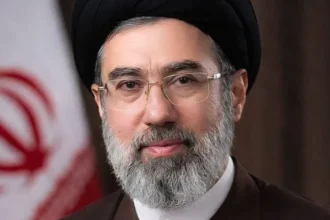
Be it Trump tariffs, an echo of 21st century neo-mercantilism that seeks to bring back national power home, the ill-conceived hostility and war on the Islamic Republic of Iran, the dissipation of the QUAD, the return of China with Russia as a secondary great power, and so on, the post-Second Great War liberal world order and the regimes designed as a scaffolding for it are in their dying throes.
In the main, these developments are sanguine. One significant aspect of the fraying and breakdown of the post-war order is the Nuclear Proliferation Regime (NPT).
The NPT, designed to keep nuclear weapons development and possession restricted to a club, was observed mostly in the breach. This accrued from security and political reasons. Nukes offered a given state the ultimate security. They also amplified that state’s power and prestige.
But the NPT remained, like other ossified regimes and international institutions such as the United Nations, the WTO, and so on. US President Donald Trump threw the proverbial spanner into the works of it all.
While the Iran war was a costly distraction for the US under Trump and the Trumpian agenda alarmed most, if not all, world powers that had developed a perverse stake in this order, it appears to be a harbinger of a new significant shift.
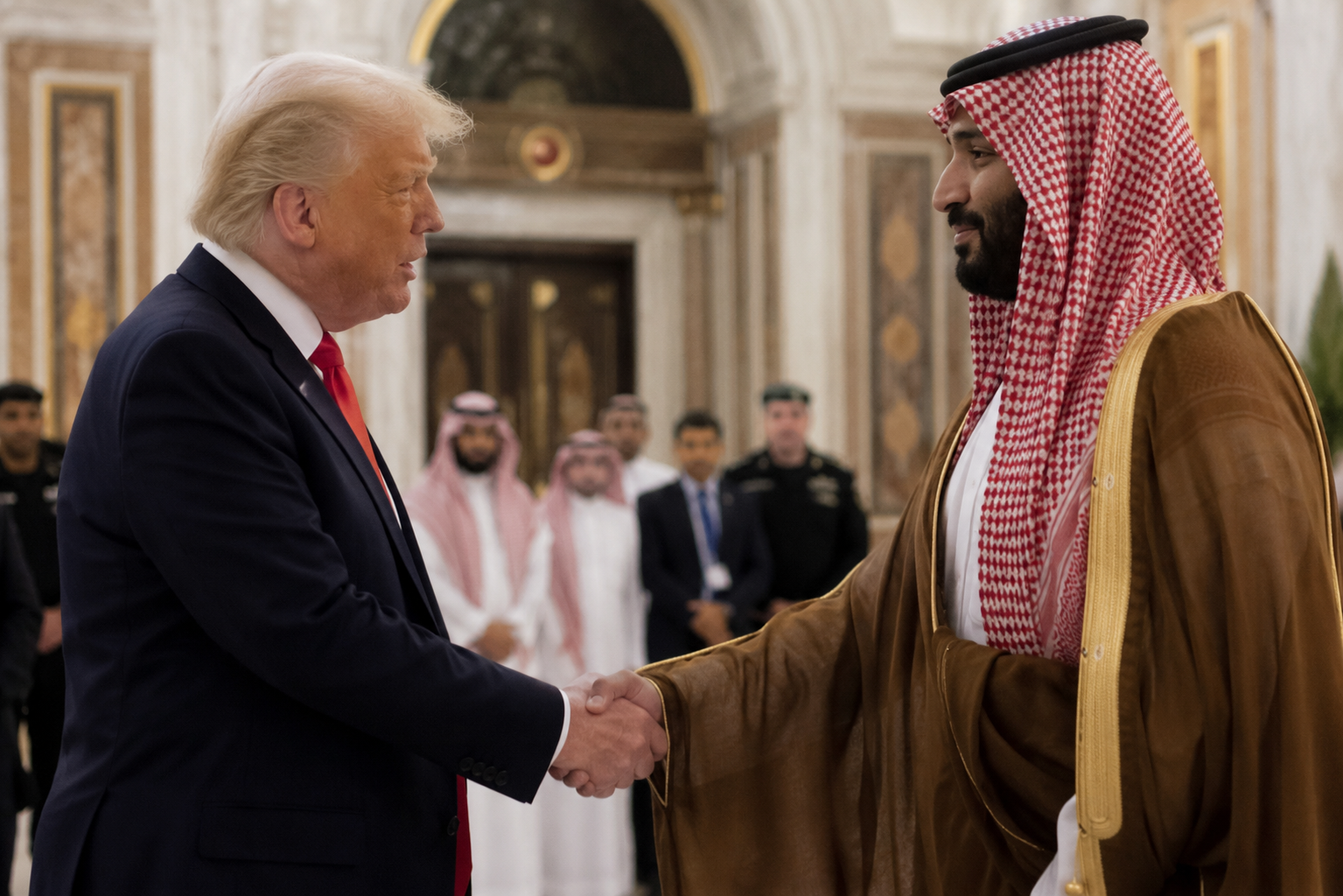
The reference is to the US deal with Saudi Arabia to develop nuclear energy. Even though this is speculative, this deal leaves ajar the door for Saudi Arabia to become a nuclear power.
The war against Iran and its able and successful resistance appear to be one important variable in the new grand strategic paradigm in the offing. The other appears to be the middle powers banding together and balancing against the United States.
Taken together, these shifts point to the ‘solid and abiding’ laws of international relations: power as the ultima ratio of international politics, the elemental quest for the same by states, and its important axiom, the balance of power politics.
There are important implications for the nature of power as well. Power, and its so-called fungibility, is power, hard power to be precise. No matter the variations on this concept, say valiant attempts by the great and brilliant late Joseph Nye, a man of great sense, sensibility, and sensitivity too, to blunt the raw, gnawing edges of power, it is hard power that matters.
Obiter dictum, so-called “middle power balancing,” pioneered by an investment banker turned politician, Mark Carney of Canada, and supported by Australia, with Finland childishly tacking itself to it like a lackey, is a perfect example of this.
None of the middle powers by themselves can balance against the US. So what do they do? They band together to amplify their power. This balancing may not be dismissed. It has some merit, but only up to a point.
The ‘Trump card’ and all the aces lie with the US, and of course China.
What is meant by this?
It means, by all metrics and indices, the US is bound to lead. But it cannot and will not lead by the yardsticks of the past.
The world in 2026 is a very different place. It calls for different paradigms and grand strategies. It is here that the US-Saudi deal assumes significance.
Broken down, it clearly means balance of power politics. The US, post its Iran war debacle, is balancing against the new regional hegemon, Iran. Two, while this may be a bit of a stretch, the US is donning the avatar of an offshore balancer.
That is, it may reduce its overt and visible footprint in the Middle East, in the meantime retaining its options.
Three, at another level of analysis, the US-Saudi deal is in the nature of cocking a snook at “middle power balancing.”
All these cross-cutting themes pertain to regional orders and how they will relate to the new world order. Are there any implications for world politics and international relations?
Yes. Indeed.
The world order that will emerge from the churn will be one with elements of shared hegemony. This harks back to the “hegemonic stability theory,” which postulated that, given anarchy in international relations and the bleak possibility of global governance, a benign hegemon was good for world peace and stability.
But the referent for the HST was the US. Given the churn in international politics and with China emerging as a distinct pole in international relations, there is an odd combination now.
In this matrix, there are two scenarios that may pan out and denoue. One is the famed, hoary Thucydides Trap.
In this schema, roughly, when a challenger power and a status quo power close the power gap, war ensues.
The other is a novel idea and concept that possibly gives short shrift to war: co-hegemony.
Disaggregated and reified, this refers to a world order where China and the US both become custodians of world order, peace, and stability.
Can this happen? Can two swords remain in the same sheath?
This is a billion-dollar question.
However, given the drift of world politics and international relations, co-hegemony appears to be crystallizing.
Ultimately, in real terms, whether it will remain a practical concept or not, co-hegemony implies and means conflict management by the US and China in given issue areas.
While the overall framework will be that of global and regional balances of power, the holders of the balance, in the great Hans Morgenthau’s formulation, might be both China and the US.
By way of a metaphor, this means mixing chalk and cheese.
But stranger things have happened, and do happen, in history. It is to state a cliché that the US-China relationship will be the determining one for 21st century world politics and order.
While this is a given, in the meantime, deal or no deal with the US, the Saudis must grow up culturally, economically, and politically. It really is high time!
This article has been automatically published using a syndicated feed. The content is sourced externally and may not have been reviewed by The Freelancers Team.