


Washington Claims Breakthrough, Tehran Says No Deal Yet
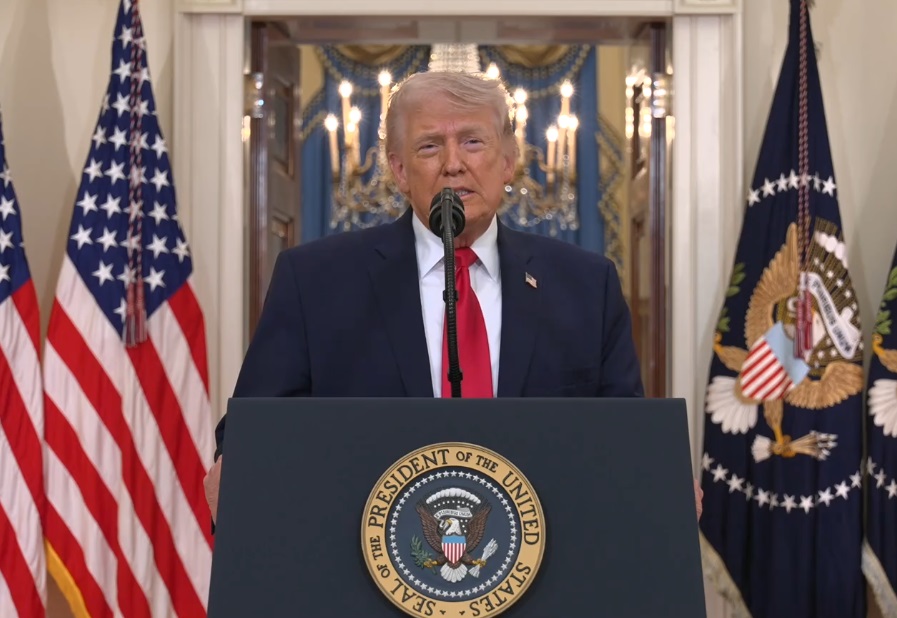
Washington – US President Donald Trump on Saturday announced that he had called off a planned military strike against Iran, claiming regional powers had sought a pause after the “parameters of a deal” to end the five-month conflict had been reached.
Tehran, however, insisted that no agreement had been reached on key issues—particularly the reopening of the Strait of Hormuz—and warned that any fresh US or Israeli attack would trigger a decisive military response. The contrasting narratives underscored both the fragile state of the ongoing mediation efforts and another dramatic reversal by Trump, who had earlier threatened Iran with unprecedented military force.
Another Trump U-Turn
The announcement marks yet another reversal by Trump, who only hours earlier had warned that the United States was “locked and loaded” and prepared to unleash military force against Iran on a scale “not seen since World War II.”
In a post on Truth Social, Trump said he had agreed to halt the attack after receiving requests from regional leaders and amid ongoing diplomatic efforts aimed at ending the conflict.
“The emerging deal would include the immediate, complete and total opening of the Strait of Hormuz and an end to Iran’s nuclear threat,” Trump wrote, adding that he had agreed to cancel the attack “for the future benefit of the world” and the prosperity of Iran, while making clear that the decision remained “subject to being able to rapidly make a deal.”
The latest announcement is widely seen as another Trump U-turn. Since the US-Israeli offensive against Iran began on February 28, Trump has on several occasions declared pauses or ceasefires, only for fighting to resume after negotiations collapsed.
Tentative Framework Still Under Negotiation
According to a regional official involved in mediation efforts, the proposed framework envisages the United States and Iran returning to negotiations while continuing discussions on unresolved issues that had previously blocked an agreement.
The proposal reportedly calls for reopening the Strait of Hormuz, halting attacks across the region—including operations by Iran-backed groups—and allowing Iran to resume oil exports in exchange for the United States ending its naval blockade.
The official, however, stressed that no final agreement has yet been reached and mediation efforts remain underway.
Iran Rejects Claims on Hormuz
Despite Trump’s assertion that reopening the Strait of Hormuz formed part of the emerging deal, Iranian media swiftly dismissed reports suggesting Tehran had agreed to lift restrictions on the strategic waterway.
Fars News Agency, citing sources close to Iran’s nuclear negotiating team and military officials, described the reports as false and insisted there had been no change in Iran’s policy.
According to the sources, the Strait of Hormuz will remain closed as long as what Tehran describes as hostile US actions continue. Passage through the waterway, they said, would remain subject to authorisation by the Islamic Revolution Guards Corps (IRGC) Navy, warning that unauthorised vessels risked military action.
The sources also rejected reports claiming Iran had accepted any proposal to reopen the Strait, calling them “baseless.”
Tehran Warns Against Fresh Aggression
Iran, meanwhile, responded to Trump’s announcement with caution rather than optimism.
Iranian Defence Minister Aziz Nasirzadeh said the country was “neither surprised nor passive” and remained fully alert in the face of continuing US threats.
Earlier, Foreign Minister Abbas Araghchi told Saudi Foreign Minister Faisal bin Farhan that any hostile action by the United States or Israel—or assistance by regional countries in such attacks—would be met with a “decisive and proportionate response” from Iran’s armed forces.
Araghchi also held consultations with Turkish and Pakistani officials, including Pakistan’s Army Chief Field Marshal Asim Munir, as diplomatic efforts intensified to prevent another escalation.
Iranian Parliament’s National Security and Foreign Policy Committee spokesperson Ebrahim Rezaei also warned that any retaliation would not be confined to the Persian Gulf, saying Iran would target the source of any aggression “from anywhere.”
Regional Diplomacy Intensifies
The latest developments came amid an intense diplomatic push involving Qatar, Oman, Saudi Arabia, Turkey and Pakistan.
Qatari mediators held separate discussions with Araghchi, US envoy Steve Witkoff and Omani officials in an effort to secure broader understandings that could eventually lead to de-escalation.
Although reports suggested progress in the talks, negotiators acknowledged that substantial differences remained.
Saudi Arabia Urges Restraint
Saudi Crown Prince Mohammed bin Salman reportedly urged Trump to avoid further military escalation during a telephone conversation on Saturday.
According to officials familiar with the discussions, Riyadh expressed concern that any US strike on Iran’s energy infrastructure could provoke retaliatory attacks on Gulf energy facilities and shipping routes.
Similar appeals for restraint have reportedly been conveyed by Qatar, the United Arab Emirates, Turkey and Pakistan.
US Embassies on Alert
US embassies across West Asia issued heightened security advisories after Trump’s earlier warning that Washington was prepared to “hit Iran hard.”
The alerts urged American citizens and diplomatic personnel to exercise caution amid fears that Tehran could retaliate against US interests if military action resumed.
Diplomacy Still Hanging by a Thread
While Trump’s latest announcement has revived hopes for renewed diplomacy, the sharp divergence between Washington’s claims and Tehran’s position illustrates how fragile the current process remains.
With Iran denying any agreement on reopening the Strait of Hormuz and insisting its military posture remains unchanged, the region continues to hover between the prospect of negotiations and the risk of another round of conflict.
This article has been automatically published using a syndicated feed. The content is sourced externally and may not have been reviewed by The Freelancers Team.