


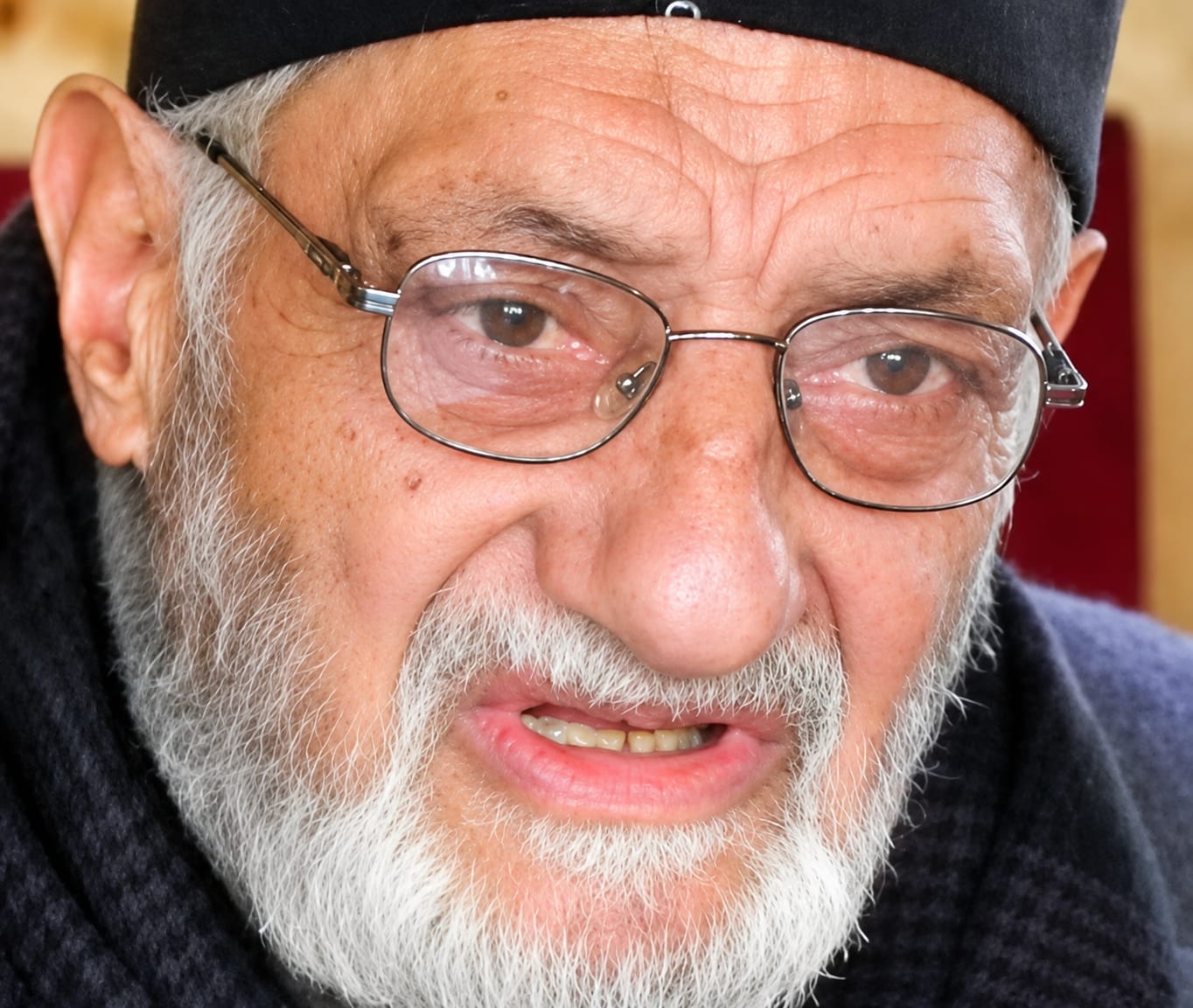
Srinagar– Kashmir lost on Tuesday a member of a generation whose lives were deeply intertwined with the Valley’s political and social history, with the passing of prominent civil society activist and engineer Mohammad Anwar Ashai at his residence in Rajbagh.
Ashai, scion of the distinguished Ashai family of downtown Srinagar, was widely mourned across social, religious, political and civil society circles. He was remembered by friends and contemporaries as a widely read, articulate and socially conscious person whose interest in Kashmir’s history, politics, education and contemporary affairs remained undiminished until the closing years of his life.
He was the son of the late Khwaja Ghulam Ahmad Ashai, a pioneering educationist and political figure associated with the intellectual and political awakening of Kashmiri Muslims during the pre- and post-Independence period.
Anwar Ashai inherited from his family a strong tradition of intellectual curiosity and public engagement. His involvement in public affairs began during his student years, when he emerged as a student leader and participated actively in the political and social movements of the 1960s.
Historical accounts identify him as one of the members of the Students and Youth League that emerged in Kashmir in 1964, placing him among a generation of young Kashmiris who helped give organised expression to student activism in the Valley.
His political involvement came at a personal cost. Ashai was imprisoned several times during his student years for his political activities and for raising issues concerning the rights of the people of Kashmir. Remarkably, he continued his education during his incarceration and completed his engineering studies despite the hardships of imprisonment.
An engineer by profession, Ashai’s engagement with society, however, extended far beyond his professional career. From adolescence to the final years of his life, he remained closely interested in public affairs and continued to participate in discussions on issues affecting Kashmir.
According to prominent social activist Shakeel Qalandar, Ashai was closely associated with the Kashmir Centre for Social and Development Studies (KCSDS), where he remained actively involved in its deliberations and programmes.
“He was deeply interested in issues concerning society and remained a keen participant in public discourse,” Qalandar said.
Ashai contributed to the organisation of seminars, round-table conferences and public discussions on a range of issues, including the environment, education, healthcare, social reform and other matters concerning the people of Jammu and Kashmir.
Friends and colleagues recalled him as a dignified, warm and engaging personality whose conversations reflected his extensive reading and deep understanding of Kashmir’s history and society. He believed in informed public discourse and remained willing to engage, deliberate and contribute whenever issues of wider public concern came up.
His life also reflected the political turbulence through which Kashmir passed over several decades. Those who knew him remember a man who remained engaged with public life even as political circumstances changed around him.
Former Member of Parliament Abdul Rashid Kabli, who was associated with Ashai, described his life as one marked by prolonged struggle and hardship.
For many of his contemporaries, Ashai belonged to a generation for whom political conviction often came at a personal cost. His years of imprisonment, early student activism and decades of engagement with civil society made his life part of a larger chapter in Kashmir’s modern history.
Writer and columnist Zahid G. Mohammad remembered Ashai as “an institution in himself — a walking encyclopedia of contemporary Kashmir,” whose vast knowledge, sharp memory and deep understanding of the Valley’s history and society made him a valued voice in public discourse.
Hundreds of people from different walks of life attended his funeral prayers, which were led by prominent Muslim cleric Maulana Showkat Hussain Keng. His mortal remains were subsequently laid to rest at the family’s ancestral graveyard at Ashai Kocha, Fateh Kadal, Srinagar.
According to family sources, the congregational Fateha Khawani will be held at the ancestral graveyard at 2:30 pm on Friday, August 14.
With his passing, Kashmir has lost not merely an engineer or civil society activist but a living link to an earlier generation of public figures who combined intellectual curiosity with a deep sense of public engagement. For those who knew him, Anwar Ashai’s memory will endure through the conversations he encouraged, the causes he engaged with and the political journey he lived through.
This article has been automatically published using a syndicated feed. The content is sourced externally and may not have been reviewed by The Freelancers Team.