



By Syed Sammar Mehdi
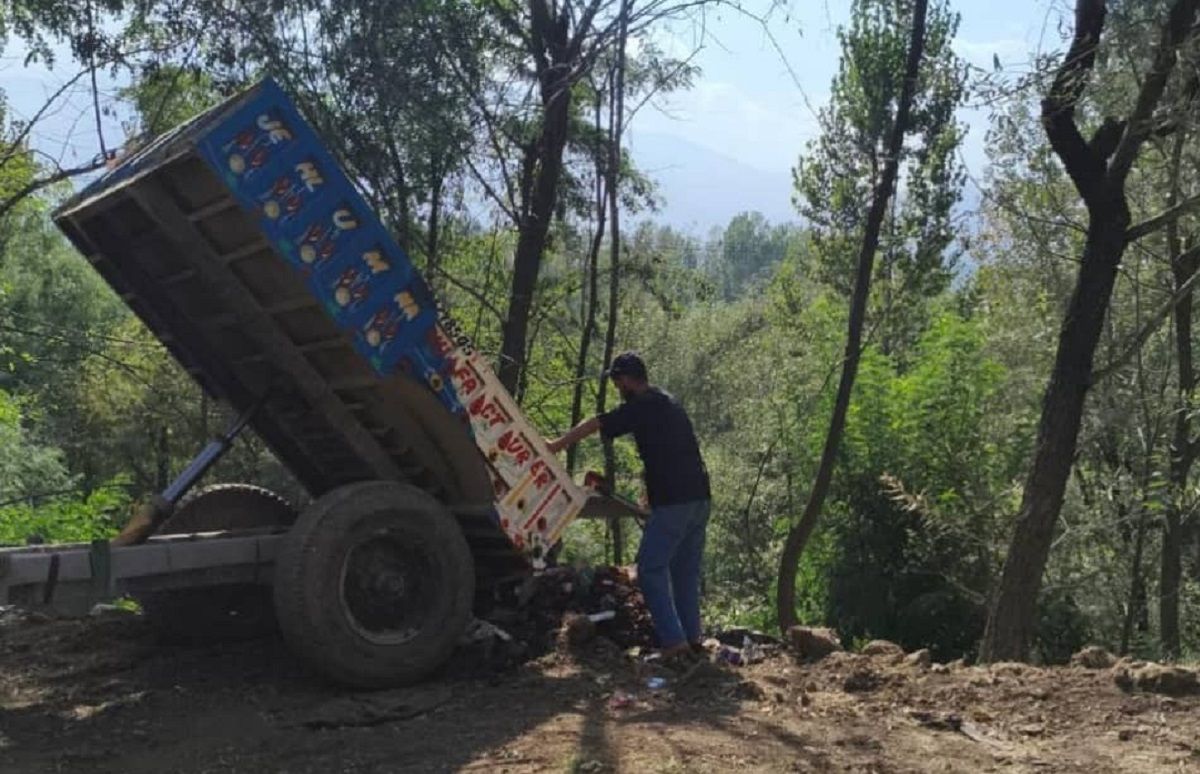
Srinagar- The smell reaches the road before the waste comes into view. Stray dogs move between the piles, and children walking to a nearby school pinch their noses as they pass. Three irrigation canals wind close to the site, carrying water that farmers in Ohangam, a village in the Rathsun block of Budgam district, use for their orchards.
For two years, residents say, the Rural Development Department has treated this patch of roadside land as a dumping ground for the region’s municipal solid waste, piling it up without consent, without segregation and without a single scientific safeguard.
Now the National Green Tribunal has stepped in.
The Principal Bench, led by Chairperson Justice Prakash Srivastava, issued notice this week to the Jammu and Kashmir government and ordered the state Pollution Control Committee to inspect the site again and report back on whether the allegations hold up.
The petition came from Raja Muzaffar Bhat, an activist who accused the Assistant Commissioner Panchayat of Budgam and the Block Development Officer of Rathsun of running an illegal operation on land the local Halqa Majlis, or village council, never approved. His complaint points to violations of the Solid Waste Management Rules of 2016 and 2026, which set strict standards for how municipal waste must be handled, from separation of materials to distance from homes and schools.
The Pollution Control Committee had already visited the site in June, after locals protested the dumping and the department’s plans to build a waste processing unit there. Its inspection report, entered into evidence by the petitioner’s counsel, Advocate Saurabh Sharma, along with geotagged photographs, described a site roughly 125 meters from an educational institution and about 200 meters from human habitation, with the closest house sitting just 120 meters away and orchards surrounding it on all sides.
Investigators noted construction work already underway at the foundation level, along with stray dogs roaming the grounds and a persistent odor drifting onto the road, making travel through the area unpleasant for residents and passersby alike.
The department responsible for the waste, the report concluded, bears the obligation to see that it gets separated, processed and disposed of according to the rules, an obligation Bhat says has gone unmet for years.
What troubles him most is not only the dumping itself but what officials are planning next: a plastic waste processing plant on the same disputed ground.
“Setting up such a facility without the consent of the Gram Sabha,” he argues, “breaks the same rules meant to prevent exactly this kind of imposition on a community that never agreed to host it.”
Land for industrial waste processing exists elsewhere, he says, in designated estates built for that purpose. Placing a plant beside homes and orchards, against the wishes of the people who live there, he calls simply illegal.
The tribunal’s order captured some of that frustration in its own language, calling it ironic that tons of untreated waste had piled up over two years without the village council ever choosing the site. It directed the Pollution Control Committee to complete a fresh inspection, verify the claims and recommend punitive and remedial steps if the allegations prove true.
A status report is due before the next hearing, scheduled for October 29.
Until then, the canals flow past the waste, the orchards bear fruit downstream, and Ohangam’s families wait to see what the court decides.
This article has been automatically published using a syndicated feed. The content is sourced externally and may not have been reviewed by The Freelancers Team.