


Srinagar- From Tehran to Qom… from Najaf to Karbala… and finally to Mashhad, the coffins of Ayatollah Seyyed Ali Khamenei and the members of his immediate family killed alongside him in the February 28 US-Israeli strike completed a journey that was as much political as it was spiritual.
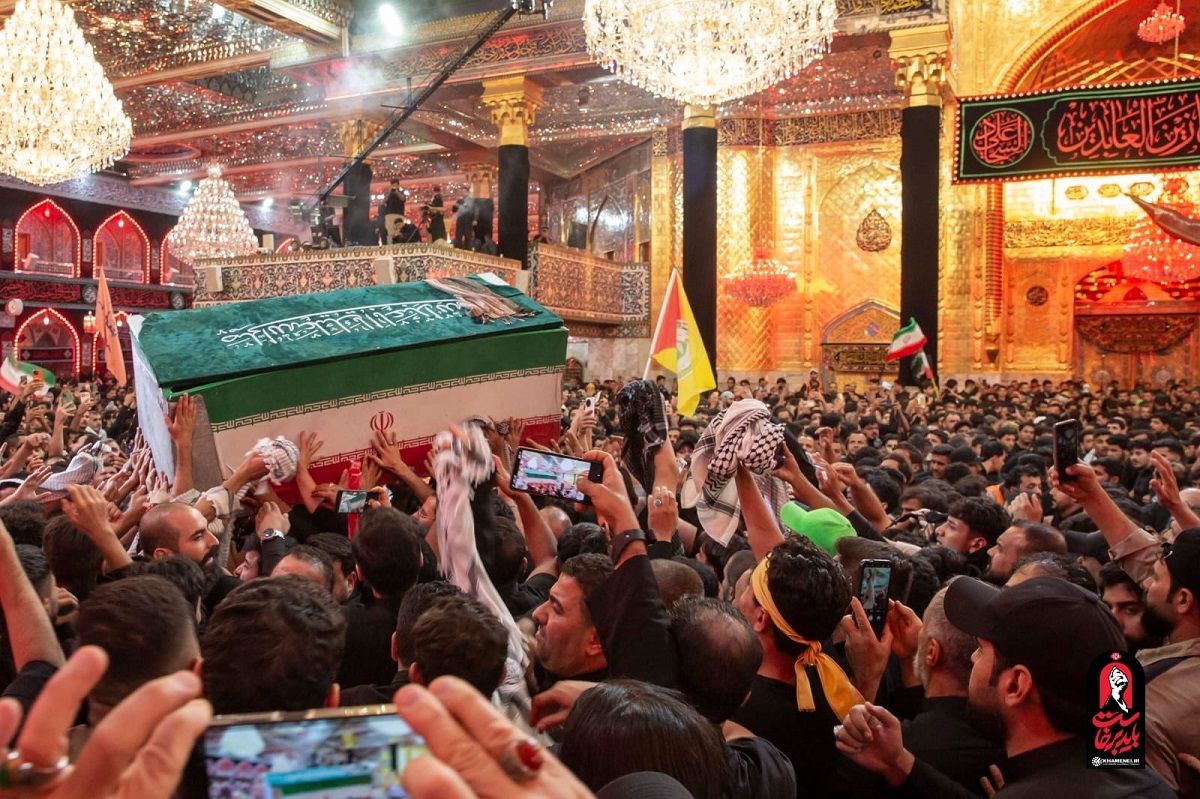
What unfolded this week was not merely a state funeral. It became one of the largest public mourning ceremonies ever witnessed in recorded history, stretching across Iran and Iraq and drawing millions into the streets in a powerful display of grief, faith and defiance.
When President Donald Trump launched the war on February 28 alongside Israeli Prime Minister Benjamin Netanyahu, Washington predicted a different ending. Trump declared that the Islamic Republic was on the brink of collapse and gave Iran 24 hours to surrender.
Six months later, the images told a strikingly different story.
Instead of a collapsing state, the world saw overflowing streets from Tehran to Mashhad. Instead of a leadership abandoned by its people, millions turned out to bid farewell to a man who had led Iran for nearly four decades.
Perhaps the most remarkable scenes came not inside Iran, but across the border in Iraq.
For a country that once fought an eight-year war against Iran at the behest of America and its allies, it welcomed the Iranian leader’s coffin with extraordinary emotion. Millions of Iraqi mourners transformed the funeral into a symbol of how profoundly the region has changed during the Khamenei era. The unprecedented scenes from Najaf and Karbala reflect the religious and political bonds that now connect proverbial Arab and Ajam under one banner.
The funeral also unfolded under the shadow of war.
Despite a fragile ceasefire, Iran remains on a war footing. American attacks continue, Israeli plots have not entirely ceased, and both Trump and Netanyahu have publicly renewed threats against Iran.
Against that backdrop, every stage of the funeral carried a message—not only to Iranians but to the wider region and the world.
The route itself traced the heart of Shia Islam: Tehran, the seat of the Islamic Republic; Qom, nations centre of religious scholarship; Najaf and Karbala, the holiest cities of Shia Islam; and finally Mashhad, where Sayyed Khamenei was born and where he was laid to rest beside Imam Reza, the Eighth Imam from the household of Prophet (Pbuh).
It was a carefully choreographed journey linking revolution, religious authority and historical memory.
Whether viewed as an expression of genuine popular devotion, a demonstration of state mobilisation, or both, the scale of the funeral has reshaped the narrative surrounding the war.
The predictions of imminent collapse have, for now, been overtaken by images of extraordinary display of public allegiance to the system.
With Ayatollah Khamenei now laid to rest in Mashhad, a defining chapter in Iran’s history has come to an end. Yet as a new leadership takes charge under the shadow of continuing threats from the United States and its allies, the six-day funeral has projected an image of resilience. Despite war, assassination and sustained external pressure, the Islamic Republic demonstrated an ability to mobilise millions at home while inspiring an extraordinary outpouring of solidarity beyond its borders.
Whether that public mobilisation translates into enduring political strength will be judged by the challenges that lie ahead. But one reality has already emerged from the images that travelled from Tehran to Qom, Najaf, Karbala and finally Mashhad: they stood in sharp contrast to predictions of the Islamic Republic’s imminent collapse and reaffirmed that Iran’s religious influence and regional political reach remain powerful forces in West Asia’s evolving geopolitical landscape.
This article has been automatically published using a syndicated feed. The content is sourced externally and may not have been reviewed by The Freelancers Team.