


Tehran- Iran dramatically widened its retaliation against the United States on Thursday, launching fresh missile and drone strikes on American military facilities in Kuwait, Jordan and Bahrain, while warning President Donald Trump that any attack on Iranian civilian infrastructure would trigger a devastating regional response.
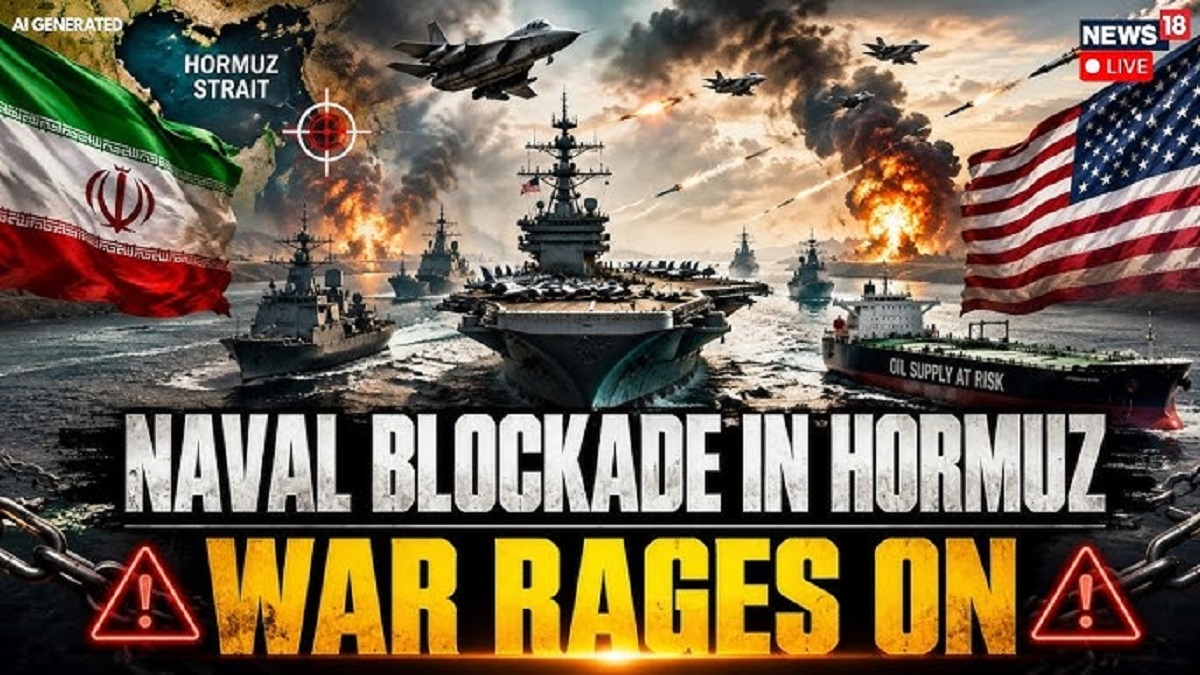
The latest escalation came less than 24 hours after the United States expanded its military strikes on Iran and reinstated a naval blockade through the Strait of Hormuz, pushing the two countries closer to an open regional war.
The US strikes early Thursday hit around Tehran, state media reported. It also reported that American attacks targeted Semnan province, home to Iran’s ballistic missile production and space program.
Iranian media also reported strikes Thursday morning around the provinces of Hamedan, Hormozgan, Khuzestan, Lorestan, Markazi, and Sistan and Baluchistan.
On Wednesday, the US resumed striking Iran during daylight, further showing the increasing tempo of the attacks. An attack on Greater Tunb Island, a strategic point in the Strait of Hormuz, targeted Iranian defence and missile sites, Central Command said.
‘Crushing Blow’
The Islamic Revolution Guards Corps (IRGC) said its Navy and Aerospace Force carried out the eighth phase of Operation Nasr-2 (Victory-2), firing missiles and drones at Ali al-Salem Air Base in Kuwait.
According to the IRGC, the operation targeted the early-warning radar of the C-RAM air defence system and “a gathering point of the criminal soldiers of the terrorist US army.”
The Corps claimed the operation dealt American forces “a crushing blow.”
In a rare direct message to Kuwaitis, the IRGC urged them to oppose the American military presence.
“The United States is using your country’s territory to carry out unprovoked acts of aggression against Iran. Rid your country of the presence of these aggressors and, by fulfilling your Islamic duty, preserve your historical honour and dignity.”
Separately, the Iranian Army announced the ninth phase of Operation Saeqeh (Lightning), saying loitering drones struck the US military’s al-Azraq Air Base in Jordan.
The Army said radar installations, communications systems and fuel depots were targeted at what it described as “one of the most important strategic and command centres for US forces operating in the West Asia region.”
It said the strike avenged American attacks on the Bampur Army garrison in Iranshahr that killed seven Iranian soldiers.
Condemning what it called America’s “barbaric attacks,” the Army said they reflected the enemy’s “inhuman nature.”
“The attacks will never be erased from the pages of history,” the statement said.
It added: “Army personnel will not retreat in the slightest from the honourable duty of defending the Iranian nation and the Islamic homeland or avenging the blood of the beloved martyrs.”
Bahrain Base Also Hit
The IRGC later announced what it described as a “devastating strike” on the US military facility at Sheikh Isa Air Base in Bahrain.
According to the Guards, the attack completely destroyed the base’s air surveillance and control radar system as well as the fuel pumping station supplying US fighter aircraft.
The IRGC said the strike was retaliation for American attacks on Iranian coastal military facilities and civilian sites, including a children’s cancer hospital and a water production facility serving pilgrims travelling to Iraq’s holy city of Karbala.
Trump Threat Draws Fierce Warning
The sharpest warning came after Trump suggested in a Fox News interview that future American strikes could target Iranian power plants and bridges.
Iran’s Khatam al-Anbiya Central Military Headquarters responded with one of its strongest statements since the war began.
Spokesman Lt Col Ebrahim Zolfaqari warned: “If the recent empty threats by the US president to have the American military target the infrastructure of the Islamic Republic are carried out, then everything that, due to Iran’s restraint, has so far remained intact will be smashed under the iron blows of the powerful armed forces of the Islamic Republic, to such an extent that no trace of it will remain, as though it had never existed.”
He also declared the Strait of Hormuz non-negotiable. “Under no circumstances and in no way will we allow America, as a foreign and extra-regional country, to interfere in the Strait of Hormuz. This is Iran’s invincible red line.”
Zolfaqari said Iran’s response would go far beyond proportional retaliation.
“Let the ignorant enemy know: for us, the moment of epic action is not a moment for restraint.”
He continued: “What is being carried out by Iran’s armed forces is not an equivalent strike; it is a superior strike.”
And warned: “The strikes will be more intense, extensive and destructive than ever before. The fury of a nation that has never surrendered will burn the aggressor.”
Meanwhile IRGC spokesman Brig Gen Hossein Mohebbi signalled that Thursday’s attacks were only part of a broader campaign.
“The enemy should not assume that it can sustain the current dynamics of the battlefield and turn the war into a war of attrition.”
He added: “Iran’s operations are currently focused on destroying the US’s offensive infrastructure in the region. The next phases will then begin.”
The IRGC also claimed its air defence network shot down a US LUCAS drone over Bandar Abbas and an MQ-9 Reaper over Andimeshk after detecting both aircraft inside Iranian airspace.
Hormuz at the Centre
The latest military exchanges came as Washington restored maritime restrictions around the Strait of Hormuz following fresh airstrikes on Iranian targets.
Tehran has responded by declaring the strategic waterway closed “until further notice”, saying it would remain so until “the end of US interference in the region.”
Carrying nearly 20 per cent of the world’s seaborne oil, the Strait of Hormuz remains one of the world’s most critical energy chokepoints.
With the United States intensifying military operations and Iran vowing that “the next phases will then begin,” fears are growing that the conflict is moving beyond limited retaliation toward a wider regional war whose consequences could extend far beyond the Gulf.
This article has been automatically published using a syndicated feed. The content is sourced externally and may not have been reviewed by The Freelancers Team.