


By Syed Sammar Mehdi
Srinagar- The number came early, and it silenced the room.
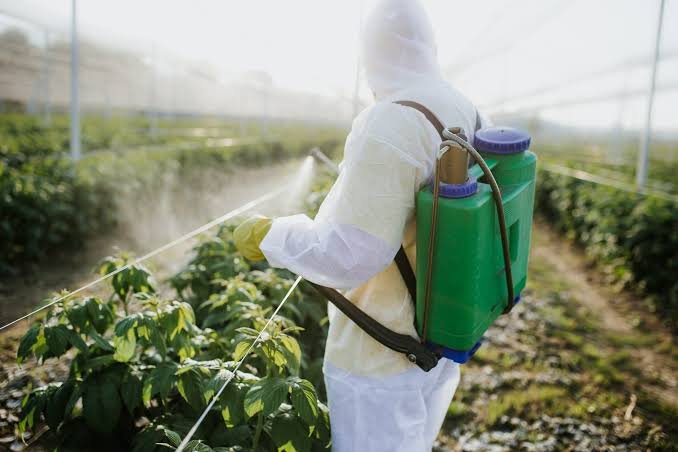
Jammu and Kashmir now uses about 3.69 kilograms of chemical pesticide per hectare of farmland, a level that dwarfs Punjab and Haryana’s 0.62 kilograms, Himachal Pradesh’s 0.50, and the national average of 0.22.
On September 13, that figure moved from agricultural data sheets into public testimony, read aloud at a conference organized by We The Humans Forum for Nature and Mankind at the Forest Media Centre in Jammu’s Vikram Chowk.
This was the day the region’s farming crisis stopped being a private concern and became a declared emergency.
District and Sessions Judge R.S. Jasrotia opened proceedings as chief guest. Prof. Rajinder Peshin, retired director of education at SKUAST Jammu, Samardev Singh Charak of the Dogra Educational Trust, and author Meenu Ajay Sawhney sat as guests of honour.
Speakers described a direct line between pesticide loads and the illnesses now spreading through farming households: cancer, chronic kidney disease, brain tumours and neurological disorders.
The remedy proposed was specific: natural farming, integrated pest management, and disease-resistant crop varieties, adopted without delay.
The chemical burden was only one part of the diagnosis.
Capt. Lalit Sharma, the trust’s vice chairman, and K.Y.S. Manhas, its chairman, told the gathering that Jammu and Kashmir’s rivers and lakes, including the Jhelum, the Wular, the Dal, the Tawi, the Devika, and the Basanter, are shrinking under encroachment, untreated sewage, heavy metals and industrial waste.
They tied that decline to a second loss: large stands of indigenous trees felled to clear paths for ring roads, highways and expressways.
Their demand to the Union Territory government was concrete: plant ten lakh native trees along the Jammu and Srinagar ring roads as environmental restitution.
Prof. Sadiq Nargal, a food technologist, called for a food chain free of contamination from soil to plate. Prof. Sanjay Khajuria, head of the Krishi Vigyan Kendra in Samba, and Balkar Singh, president of the Bhartiya Kissan Sangh in Jammu and Kashmir, pressed farmers toward crops that need fewer hazardous chemicals: high-density mangoes, jackfruit, strawberry, dragon fruit, litchi, exotic vegetables, turmeric and ginger.
Two farmers gave the argument its proof. Anshuman Singh, called a living legend of the region, studied farming methods in nine countries before turning his Bajalta land into a working model of dragon fruit, export-quality strawberries, Kesar and Alphonso mangoes, organic turmeric, blueberries and agri-tourism.
Reva Rajput, director of Devi Pindi FPO Ltd, built a small organic processing unit into a branded enterprise sold nationally, now earning her more than one lakh rupees a month.
Both were held up as evidence that safer agriculture can also be profitable agriculture.
Progressive farmers who had already made that switch, toward safer inputs, diversified crops, and agri-tourism, received shawls before the session closed.
The gesture was small, but its meaning was not.
A region using more pesticide per hectare than the rest of India combined now faces a choice that farmers, judges and scientists say cannot wait.
This article has been automatically published using a syndicated feed. The content is sourced externally and may not have been reviewed by The Freelancers Team.